Why Stellantis bet on Leapmotor, and what European buyers get
In 2023 Stellantis paid about €1.5 billion for roughly a fifth of Leapmotor, a loss-making carmaker from Hangzhou whose founder came from the security-camera maker Dahua. Three years on, Leapmotor makes a profit and one of its SUVs comes off a Stellantis line in Spain.
In October 2023 Stellantis, the group behind Peugeot and Fiat, agreed to pay about €1.5 billion for roughly a fifth of Leapmotor, a loss-making carmaker from Hangzhou. The deal gave Stellantis two seats on Leapmotor’s board and 51% of a new company, Leapmotor International, with the sole right to sell and build Leapmotor’s cars outside Greater China.
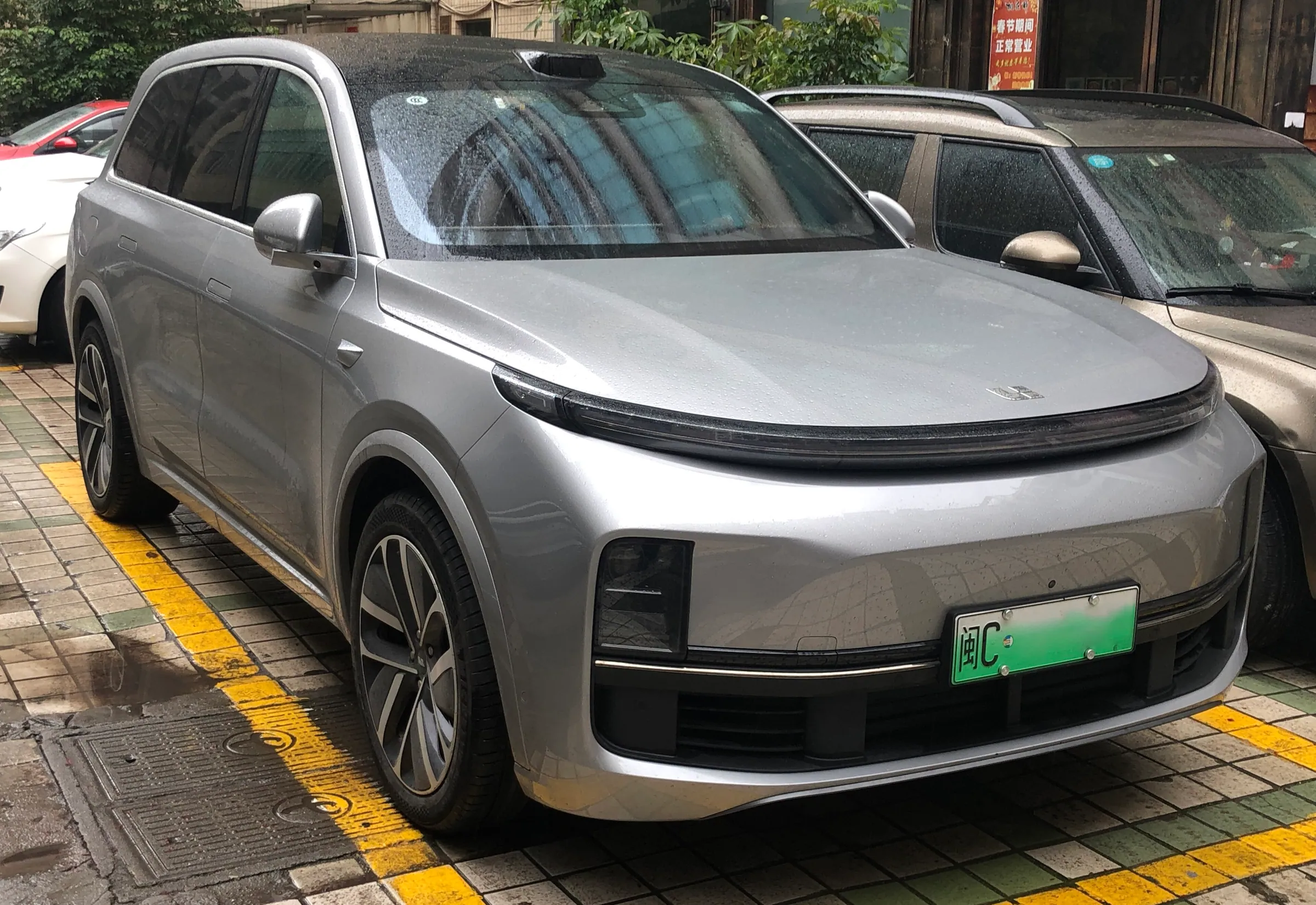
Seven weeks earlier, Leapmotor had unveiled the C10 SUV at the IAA show in Munich as its first car designed for markets outside China. Carlos Tavares, then Stellantis’s chief executive, said the investment would address “a white space in our business model” and predicted that a handful of efficient new Chinese EV makers, Leapmotor among them, would come to dominate China’s mass market. Leapmotor had also talked to Volkswagen, the Financial Times later reported.
The man from Dahua
Zhu Jiangming, Leapmotor’s founder and chief executive, is a telecoms engineer. In 1993 he and Fu Liquan started the business that became Dahua Technology in a primary-school classroom, with 5,000 yuan of capital, making walkie-talkies and intercoms for apartment blocks. Dahua grew into the world’s second-biggest maker of surveillance cameras.
His interest in electric cars dates from a trip to Spain in the early 2010s, when he saw an electric Renault on the street. In December 2015 he set up Leapmotor in Hangzhou with a team of Dahua engineers, and Dahua put up the first money.
The start was clumsy. Zhu hadn’t known that a carmaker needs a production licence from Beijing. Leapmotor’s first car, a small electric coupe called the S01, went on sale in 2019, built under contract by Hangzhou Changjiang, which went bankrupt the following year. To get a licence of its own, Leapmotor had to buy a small licensed carmaker in Fujian.
From Dahua, Zhu brought an electronics maker’s habit of keeping parts in-house. Leapmotor built its own motors from the start and designed its own controller chip, and by 2021 it was even making its own headlights, because Zhu wanted high-margin parts kept in the company. Feng Xiao, an analyst at CLSA, puts Leapmotor’s vertical integration at about 60 to 70%, behind only BYD at about 90%. On the day of the Stellantis deal, Zhu credited that in-house work for EVs made “in a most cost competitive way”.
Cheap cars, then a profit
While Nio, Xpeng, Li Auto and Xiaomi mostly chase richer buyers, Leapmotor went for China’s mass market with simpler cars sold in high volume. Deliveries more than doubled in 2024, to 293,724, and in the last quarter of that year it made its first net profit, about 80 million yuan, a year ahead of plan. In 2025 it delivered 596,555 cars, the most of any Chinese EV start-up by its own count, and earned 540 million yuan, its first profit for a full year.
Since July this year it has delivered more than 100,000 cars a month (106,127 in October), and it’s aiming for a million in 2026. Its margins are thin: in the first half of 2026 it made 210 million yuan on 38 billion yuan of revenue, and in August it cut its full-year profit target from 5 billion yuan to about 3 billion.
The cars Europe gets
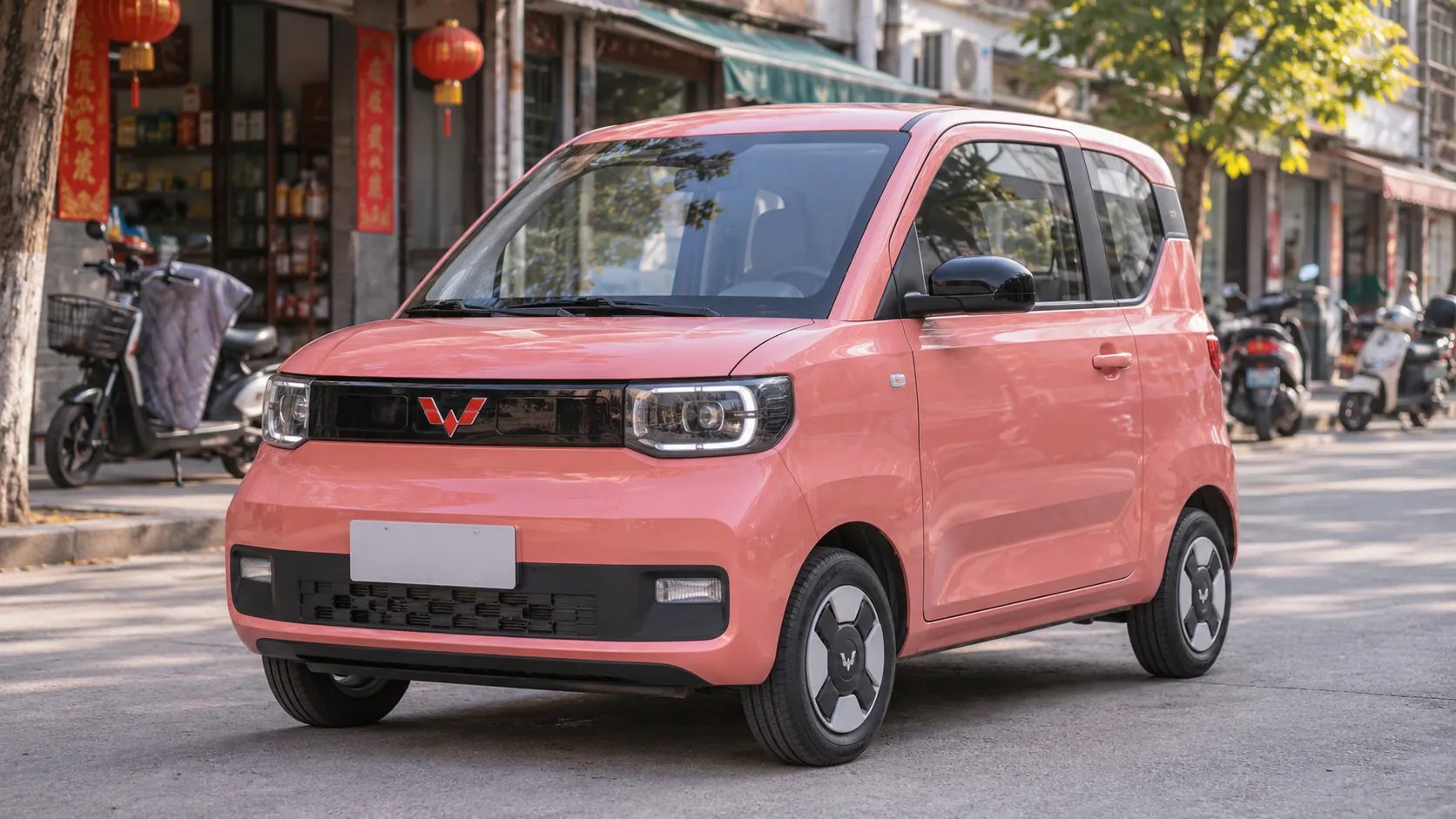
Leapmotor International started selling in Europe in September 2024 with two cars. The T03, a city car Leapmotor first sold in China in 2020, has a 37.3 kWh battery and 265 km of WLTP range, and launched at €18,900. The C10 is the SUV from Munich, with a 69.9 kWh LFP battery, 420 km of range and a launch price of €36,400.
Stellantis began assembling the T03 at its plant in Tychy, Poland, in 2024 and stopped at the end of March 2025 without saying why. Poland had voted for the EU’s extra duties on Chinese-built electric cars, and Reuters had reported that Beijing told its carmakers to halt big investments in countries that backed them. Spain abstained. The T03 now comes from China.
The C10 we’d look at first is the range extender, which reached dealers in April 2025 from €37,400. Its 28.4 kWh battery is good for 145 km on electricity, and a 1.5-litre petrol engine works only as a generator, so an electric motor always drives the wheels. Stellantis quotes more than 950 km in all on the WLTP cycle. Li Auto built its business on the same idea, as our Li Auto story explains.
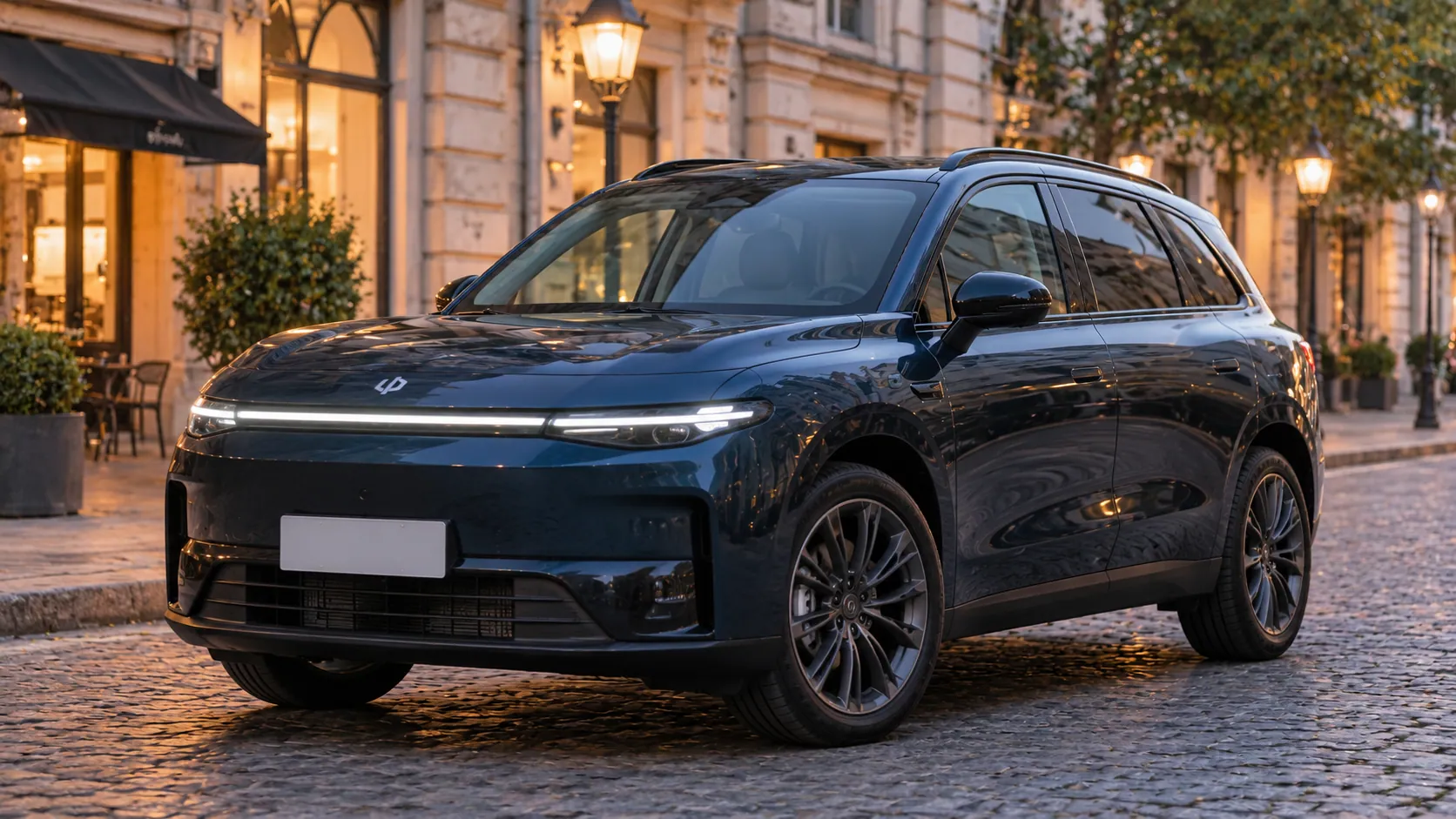
The B10, a smaller SUV, followed in 2025, and this year brought the B05 fastback and orders for the B03X crossover. Leapmotor now has more than 1,000 sales points in 36 European countries. Since October the B10 has been built at Stellantis’s plant in Zaragoza, Spain, which also makes the Peugeot 208 and the Opel Corsa.
Where the deal could go wrong
Analysts quoted by the FT warn that a Leapmotor on a Stellantis forecourt could take sales from Peugeot or Opel. Tianshu Xin, who runs Leapmotor International, says up to 80% of its customers so far were newly won. Stellantis also has factory space to fill: Antonio Filosa, who became chief executive after Tavares resigned in December 2024, has said its European plants ran at about 60% of capacity in 2025.
In May the partners said they were studying a Leapmotor model for Stellantis’s Villaverde plant in Madrid from 2028, possibly with the plant passing to the joint venture, and an electric Opel SUV for Zaragoza using parts sourced through Leapmotor International. Emanuele Cappellano, Stellantis’s head of Europe, has said the tie-up gives the group Chinese technology not yet available in Europe. “So it’s also a way to learn,” he added. We think most of the learning runs one way. Stellantis went in to sell Leapmotor’s cars abroad, and now it’s studying an Opel built with parts bought through the joint venture.
For Leapmotor, the catch is control. It owns 49% of the company that sells its cars abroad, and Stellantis picks that company’s boss. Its European plans also depend on trade politics it can’t steer, as the T03’s short stay in Poland suggests. At home, FAW, one of China’s big state-owned car groups (see our ownership map), agreed in December 2025 to buy about 5% of Leapmotor through new shares, which will dilute Stellantis’s stake. China’s securities regulator approved the share issue in September.
Correction, 25 November 2026: an earlier version described the Fujian carmaker Leapmotor bought as state-owned. Our sources disagree on who owned it at the time, so we have removed that description.
Sources
- Stellantis: Stellantis to become a strategic shareholder of Leapmotor with €1.5 billion investment, 26 October 2023
- Financial Times, via The Irish Times: Leapmotor: China's no-frills EV maker aiming to become the next BYD, 9 February 2026
- CarNewsChina: The Big Read: Story of Leapmotor, 14 November 2021
- CarNewsChina: Leapmotor C10 unveiled in IAA Mobility as the brand's first global model, 4 September 2023
- CarNewsChina: Stellantis-backed Leapmotor reaches annual profit for the first time, 16 March 2026
- Gasgoo: Leapmotor cuts full-year profit target after 210 million yuan first-half net profit, August 2026
- CnEVPost: Leapmotor delivers record 106,127 vehicles in October, topping 100,000 for fourth straight month, 1 November 2026
- electrive: Leapmotor International announces prices for Europe, 25 September 2024
- WardsAuto: Leapmotor brings ICE range extender to its C10 BEV in Europe, 2 January 2025
- electrive: Stellantis halts Leapmotor production in Poland, 9 April 2025
- Reuters: China tells carmakers to pause investment in EU countries backing EV tariffs, October 2024
- electrive: Stellantis launches production of the Leapmotor B10 in Spain, 19 October 2026
- ICEX Invest in Spain: Leapmotor to manufacture at Stellantis Zaragoza and Madrid plants, May 2026
- Gasgoo: Leapmotor receives CSRC approval for private placement, September 2026

Saba founded VoltScope and edits every story on it, checking each figure against the sources listed at its foot.
- Leapmotor
- Stellantis
- Zhu Jiangming
- C10
- T03
- B10
- Range extender