Li Auto: the carmaker that won China’s families by keeping a petrol engine
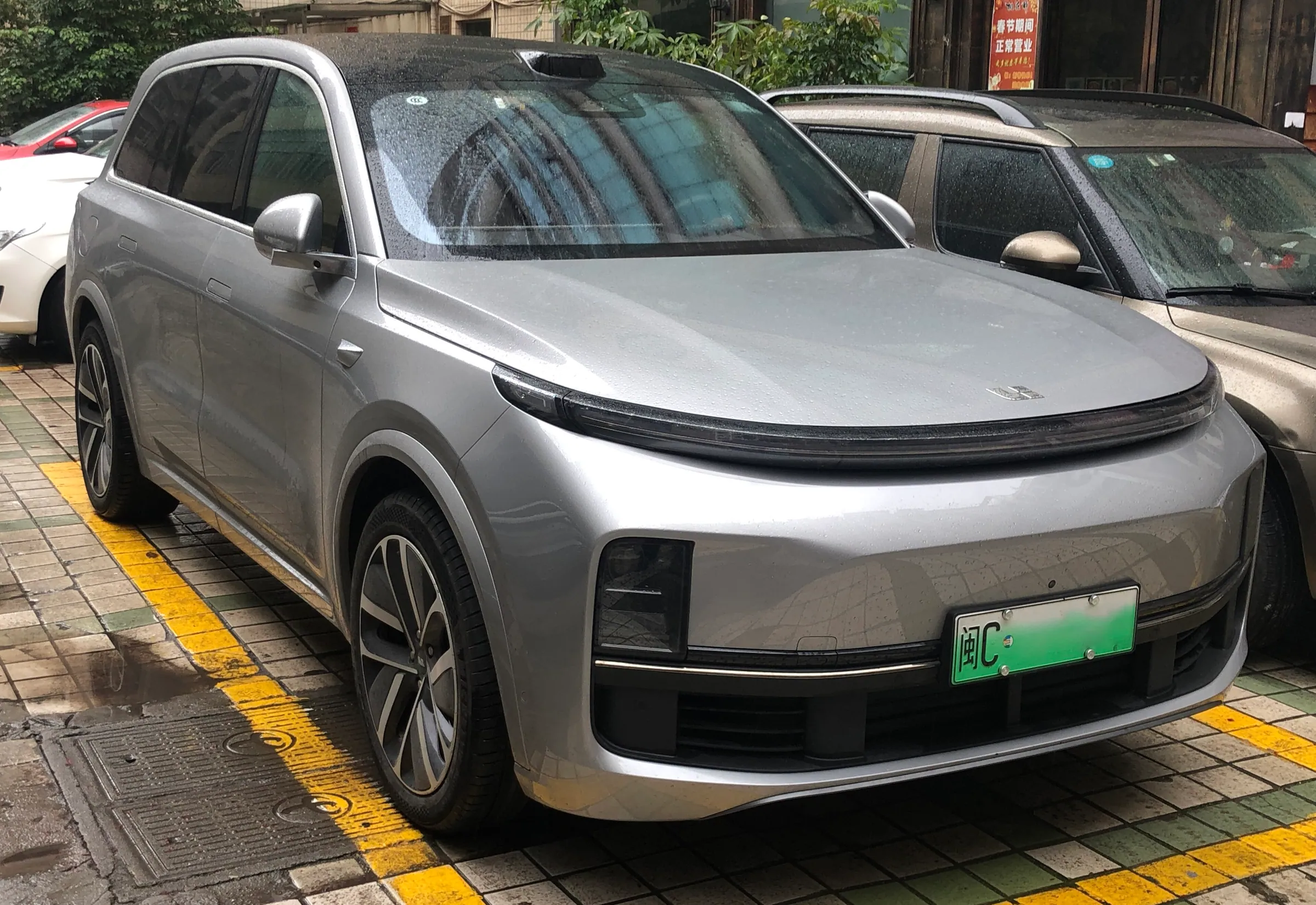
The Li Auto L9, like the company’s other range-extended SUVs, has a small petrol engine that only makes electricity. Li Auto, started by the founder of the car website Autohome, delivered about 500,000 cars in 2024 and is one of China’s few profitable EV makers.
Most Li Auto cars pair a battery and electric motors with a small petrol engine. The motors drive the wheels, as in any electric car. You charge the battery from a plug. It’s big enough for a week of commuting, and when it runs low the engine starts up and works as a generator, making electricity for the motors. Cars built this way are what the industry calls range extenders, or EREVs, for extended-range electric vehicles.
In most plug-in hybrids the engine can also drive the wheels through a gearbox. A range extender’s engine is only ever a power station on board, so the car always drives like an EV: quiet, smooth and quick off the line.
China counts both kinds as new-energy vehicles. Every car Li Auto makes is driven by electric motors and counts as one, which makes Li Auto an electric car company by China’s definition. New-energy vehicles get green number plates, and in many cities a green plate is far easier to get than a petrol car’s blue one. Our glossary of Chinese EV terms explains how the plates work.
From Autohome to the L9 and the MEGA
Millions of Chinese buyers read reviews and compared prices on Autohome, one of China’s biggest car websites, before visiting a showroom. Li Xiang had started it, and he spent a decade watching what families asked about and worried over, and which cars they finally bought. In 2015 he decided to build cars himself. He had concluded that Chinese families wanted electric cars but didn’t trust batteries alone to get them home on the long drives they make a few times a year, often at holiday time when motorway chargers have queues. A car that never left them stranded would sell, he argued, so the company he founded, Li Auto, kept a petrol engine.
Its first car, the Li ONE, went on sale in late 2019, when nobody else was selling families the feel and running costs of an electric car without the worry of a long trip. It was a six-seat SUV with a 1.2-litre three-cylinder engine under the bonnet, there only to charge the battery. China’s government and most start-ups were betting on pure battery cars at the time. Plenty of people in the industry thought the petrol engine was a mistake, a crutch that would be obsolete within a few years.
The Li ONE became one of the best-selling large SUVs in its price range. In 2022 Li Auto followed it with the L9, a full-size six-seat SUV, then the L8 and L7. All three were built around a family, with a second row that reclined like an armchair, screens for the rear passengers and a fridge between the front seats. Chinese social media summed up the formula as “fridge, colour TV, big sofa”, a joke about cars that felt like living rooms, and buyers took it as a description of what they wanted.
Success made Li Auto bold enough to launch the MEGA, its first pure battery-electric car, in March 2024. The MEGA is a large people carrier with a smooth, rounded shape, a design that drew jokes online. Early sales were slow and the company cut its sales forecast for the quarter.
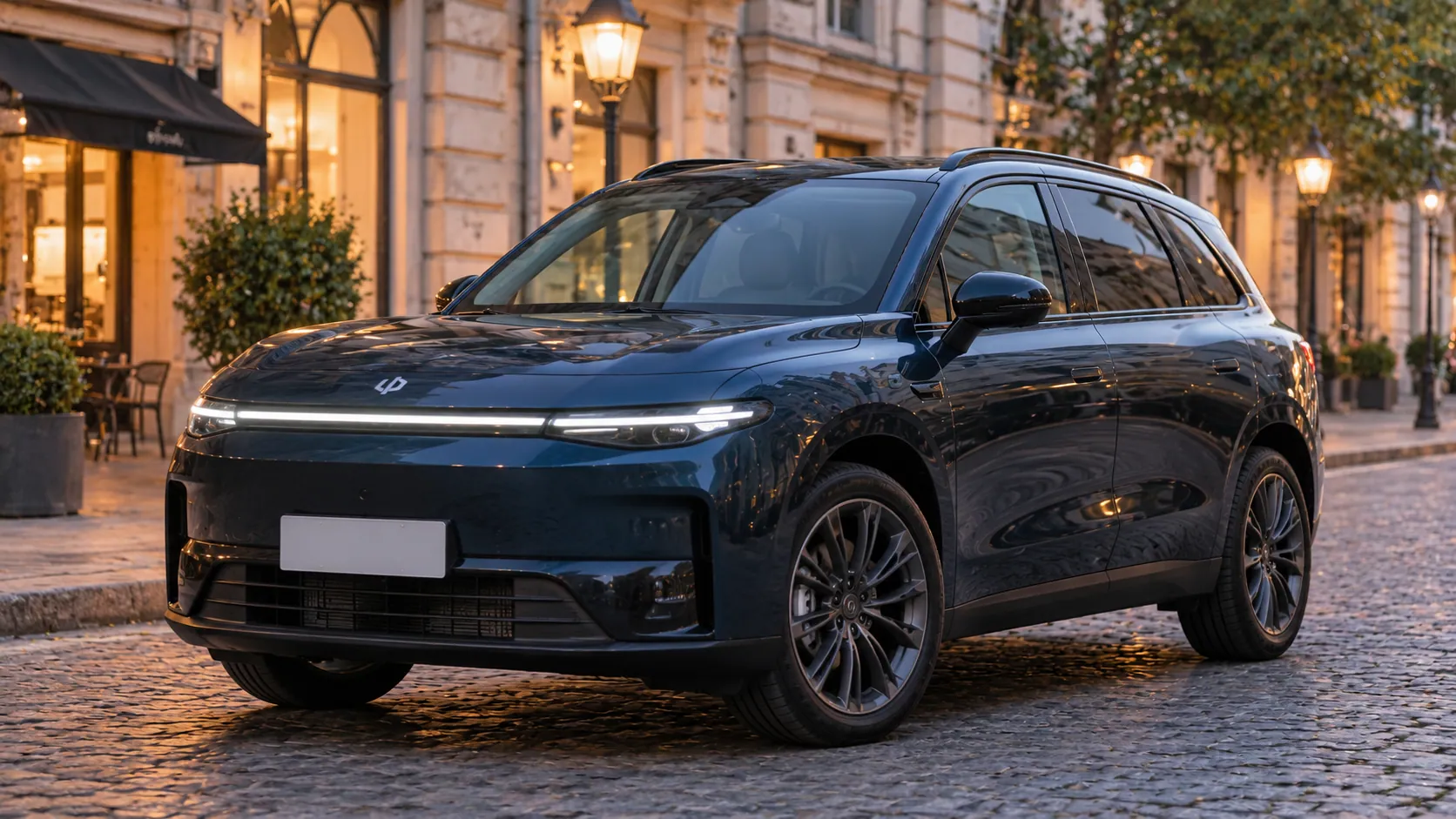
By then rivals had seen Li Auto’s sales figures and caught up with range extenders of their own. AITO, the brand that Seres builds with Huawei’s help, took a big share of the large-SUV market with its range-extended M7 and M9. We cover that partnership in how Huawei’s car business works. Leapmotor, Deepal and others sell range extenders as well. Carmakers in Europe and North America, where charging networks are thinner than China’s, now face the question of whether drivers will trust batteries alone on long trips. Range-extended models are arriving there too, Leapmotor’s C10 among them in Europe. Li Auto launched its first battery-electric SUVs, the i8 and the i6, in 2025 and kept the range-extended L series on sale.
How many cars Li Auto sells, and where
In 2023 Li Auto delivered about 376,000 cars and made a net profit of more than 10 billion yuan, a rare result for a Chinese EV start-up. Deliveries rose to about 500,000 in 2024. Almost all of Li Auto’s sales are in China. Its cars do turn up abroad, in places such as Kazakhstan, but the company doesn’t sell officially in Europe or the US.
Sources
- Li Auto: Initial public offering prospectus, SEC Form 424B4, 30 July 2020
- Li Auto: Li Auto Inc. Unveils Li L9, Its Flagship Smart SUV, SEC Form 6-K, 21 June 2022
- Li Auto: Li Auto Inc. Announces Unaudited Fourth Quarter and Full Year 2023 Financial Results, SEC Form 6-K, 26 February 2024
- Li Auto: Li Auto Inc. February 2024 Delivery Update, SEC Form 6-K, 1 March 2024
- Li Auto: Li Auto Inc. Updates First Quarter Delivery Outlook, SEC Form 6-K, 21 March 2024
- Li Auto: Li Auto Inc. December 2024 Delivery Update, SEC Form 6-K, 1 January 2025
- Ministry of Industry and Information Technology: New energy vehicle definitions and catalog

Saba founded VoltScope and edits every story on it, checking each figure against the sources listed at its foot.
- Li Auto
- Li Xiang
- Range extender
- EREV
- Li L9
- Li MEGA
- AITO