Which EV battery lasts longest? LFP, NMC and the models that lose the least
Real degradation data from Europe, the US and China, model by model: how LFP compares with nickel cells, how far BYD, CATL and Tesla’s million-kilometre claims hold up, what the warranties promise, and how to make a battery last.

Electric car batteries wear out slowly. Geotab, a vehicle telematics company, tracked more than 22,700 vehicles across 21 models and found an average loss of 2.3% of capacity a year, which would leave 81.6% after eight years. Aviloo, an Austrian firm that sells battery tests, found that 16 of the 20 common models it measured kept a median battery health of at least 90% at 150,000 km.
Lithium iron phosphate (LFP), the chemistry in every BYD and in most EV batteries fitted in China, survives far more charge cycles in the lab than nickel-based NMC and NCA cells. Yet the best results in Europe’s used-car data belong to Korean models, led by a Kia with nickel-rich cells, and the big Chinese brands hardly appear in independent data. Our primer on the chemistries is EV batteries explained.
How long EV batteries last in real fleets
Geotab’s average was 1.8% a year in its 2023 study. It puts the rise to 2.3% down to newer vehicles and much more fast charging in its sample, about 25% of sessions against under 10% before, and says batteries haven’t got worse.
Outright failures are rare. Recurrent, a US company that follows more than 30,000 cars, puts replacements outside big recalls at 0.3% for cars from 2022 onwards, about 2% for the generation of the early Chevrolet Bolt and Tesla Model 3, and 8.5% for cars sold up to 2016. Its recall list includes the 2017 to 2022 Bolt and the 2019 to 2022 Hyundai Kona Electric.
The shape of the curve is disputed. Carly and TÜV Nord tested about 50,000 cars and found 0.7 points lost per 10,000 km over the first 90,000 km, then 2.3 points per 10,000 km. In Swedish data from Carla, cars lost about one point between 70,000 and 100,000 km. Individual cars vary widely as well. Hyundai Ioniq 5s at 150,000 km differ by more than 12 points in Aviloo’s tests, about 42 km of range, so a used buyer should have the actual car tested.
Which car has the most durable battery
Carla, a Swedish used-car dealer, analysed 9,954 battery tests made with Aviloo’s equipment between 2022 and 2026. Aviloo’s own 2026 report covers 20 models, though its published text names only a few. Tesla publishes averages for its own fleet.
| Model and battery | Data | Distance | Battery health |
|---|---|---|---|
| Kia e-Niro 64 kWh | Carla, Sweden | About 100,000 km | 97.3% |
| Hyundai Kona Electric 64 kWh | Carla | About 100,000 km | 97.2% |
| Kia EV6 77.4 kWh | Carla | About 100,000 km | 96.0% |
| Volvo XC40 Recharge 69 kWh, CATL cells | Carla | About 100,000 km | 94.7% |
| Polestar 2 78 kWh, CATL cells | Carla | About 100,000 km | 94.4% |
| Polestar 2 78 kWh, LG cells | Carla | About 100,000 km | 93.5% |
| Tesla Model 3 60.5 kWh, CATL LFP cells | Carla | About 100,000 km | 93.3% |
| Tesla Model 3, LG cells | Carla | About 100,000 km | 91.5% |
| Tesla Model 3, Panasonic cells | Carla | About 100,000 km | 89.8% and 88.2% |
| Hyundai Ioniq 5 72.6 kWh | Aviloo median | 150,000 km | 92.8% |
| Volkswagen ID.4 77 kWh | Aviloo median | 150,000 km | 90.6% |
| Tesla Model Y 78.8 kWh | Aviloo median | 150,000 km | 90.3% |
| Nissan Leaf 40 kWh | Aviloo median | 150,000 km | 86.3% |
| Tesla Model S and Model X | Tesla fleet average | 320,000 km | 88% |
| Tesla Model 3 and Model Y Long Range | Tesla fleet average | 320,000 km | 85% |
On this evidence the most durable packs on European roads are in the Kia e-Niro and Hyundai Kona Electric with 64 kWh batteries, followed by the Kia EV6. EV Database lists nickel-rich NMC622 cells for the first e-Niro 64 kWh, so a well-managed nickel battery can beat LFP. Some of the Swedish Konas may be running on replacement packs from the recall. At 150,000 km, Aviloo found the Mercedes-Benz EQA, BMW i4 and Ioniq 5 best at about 93%, and the Mini Cooper SE, Renault Zoe and Nissan Leaf worst.
The Model 3 rows are the nearest thing to a controlled test of Chinese cells: in the same car in the same country, the version with CATL’s LFP cells beat those with LG and Panasonic cells. CATL cells are also behind the Volvo XC40 and Polestar 2 results.
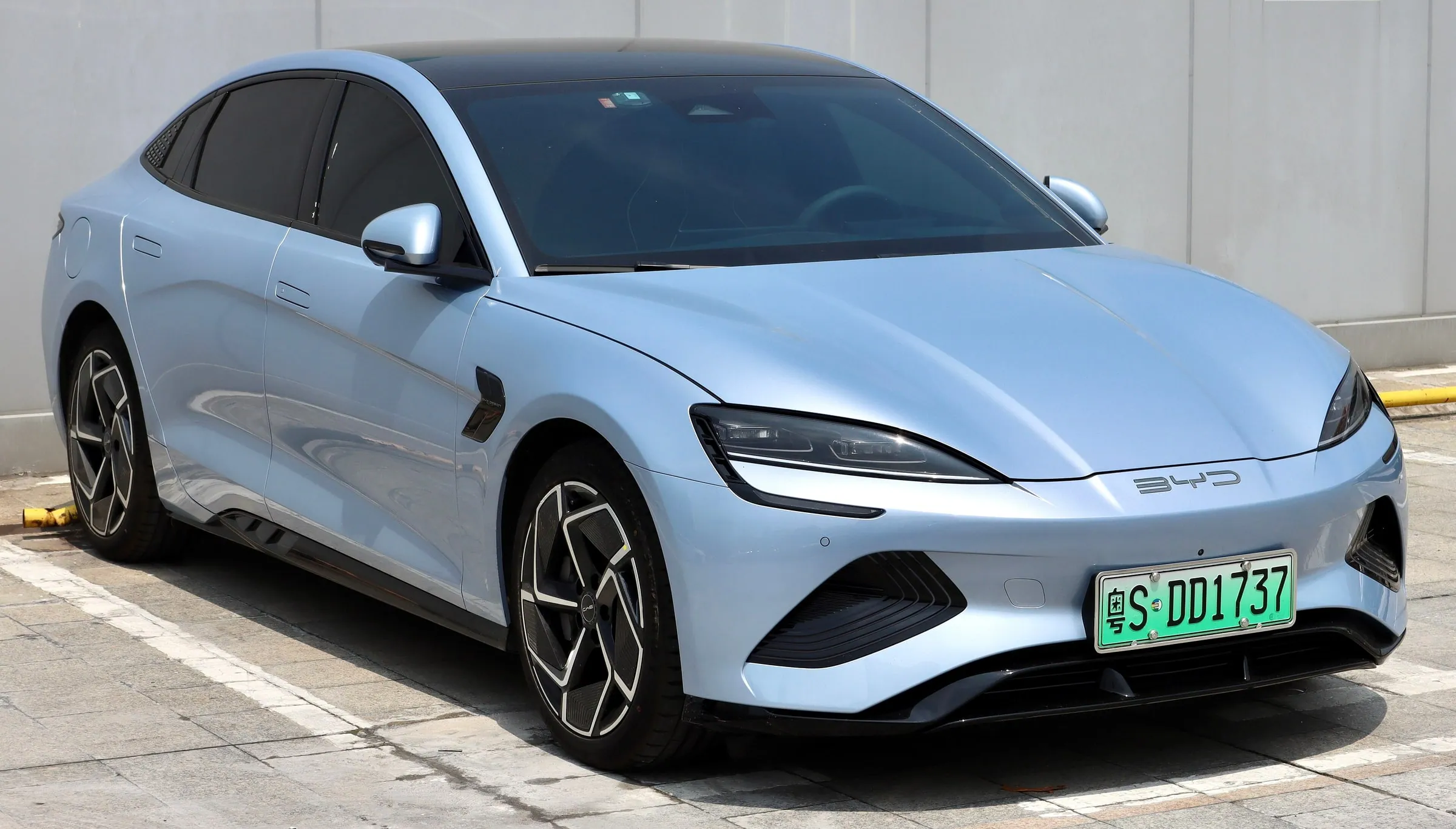
BYD and MG are missing from both published lists. The nearest BYD figure is one Australian Seal, checked by the YouTube channel Beyond EV with an OBD reader at 50,000 km. It had 95.08% of its original capacity, InsideEVs reported, after an unknown charging history.
LFP vs NMC battery life
In the lab, LFP wins on cycles by a wide margin. Sandia National Laboratories cycled commercial LFP, NCA and NMC cells under varied temperatures, depths of discharge and currents. The LFP cells lasted 2,500 to 9,000 equivalent full cycles before falling to 80% capacity, mostly extrapolated, against 250 to 1,500 for NCA and 200 to 2,500 for NMC. The gap narrowed when counted in energy delivered, since each LFP cycle carries less. These were small 18650 cells.
Cars spend most of their lives parked, so calendar ageing counts as much as cycling. A 2016 study stored NCA, NMC and LFP cells at 16 charge levels and three temperatures for nine to ten months. The nickel cells aged faster above about 60% charge and the LFP cells above about 70%. At 50°C the NMC cells aged sharply when kept full, while LFP showed no extra loss near 100%. LFP still lost about 0.2 percentage points a month on the shelf at 25°C and 0.5 at 50°C. In Sandia’s tests it also faded faster as temperatures rose from 15 to 35°C, while NMC faded more slowly. Why Chinese makers stayed with LFP when others dropped it is told in why China bet on LFP.
High-mileage taxis and ride-hailing cars in China
China has the longest record of hard-worked electric cars, but little of it has been published as battery data. BYD put 50 e6 taxis to work in Shenzhen in April 2010 and said a year later that they had covered 2.77 million km with “no noticeable energy drop”, by its own assessment. Taiyuan switched its whole taxi fleet to the e6 in 2016, and more than 8,000 of the cars reached retirement age in 2024. The Beijing News reported a deal to recycle their batteries but gave no figure for the capacity left.
The best independent look so far uses live battery data sent to China’s National Monitoring and Management Centre for New Energy Vehicles. In a 2026 Nature Energy paper, researchers from two Chinese institutes and Sweden’s Chalmers University of Technology followed 116 cars with NMC batteries for more than three years, some to 300,000 km, plus 17 buses with LFP packs. The cells in each car’s pack aged evenly to about 170,000 km. Beyond that, a few weak cells in many cars fell away, while the best cars showed little spread at 300,000 km. Because the weakest cell sets the limit, packs reached the end of their life 18% sooner in the cars, and 23% sooner in the buses, than the average of their cells.
A Xiaomi SU7 Pro driver who covered 265,000 km in 18 months said Xiaomi staff measured his battery at 94.5% health, Electrek reported, without saying how.
China’s recommended standard GB/T 46991.1-2025, in force since 1 July 2026 but not mandatory, sets 82% of usable energy after five years or 100,000 km, 75% after eight years or 160,000 km and 70% after ten years or 200,000 km for light passenger EVs. It also requires the health figure a car displays to be within 5% of the measured value.
BYD, CATL and Tesla’s million-mile battery claims
BYD says its Blade cells passed more than 3,000 charge cycles in testing, which it equates to 1.2 million km, or 400 km a cycle. The one durability test it has published in detail was its own. In August 2026 it drove a Yangwang U7, which it says was picked at random from a showroom, 30,000 km in under nine days at 240 km/h around a track in Nanning, with more than 350 flash charges at up to 640 kW in average temperatures above 36°C. The battery kept 98.7% of its capacity. Nobody independent checked the result, and nine days can’t show calendar ageing.
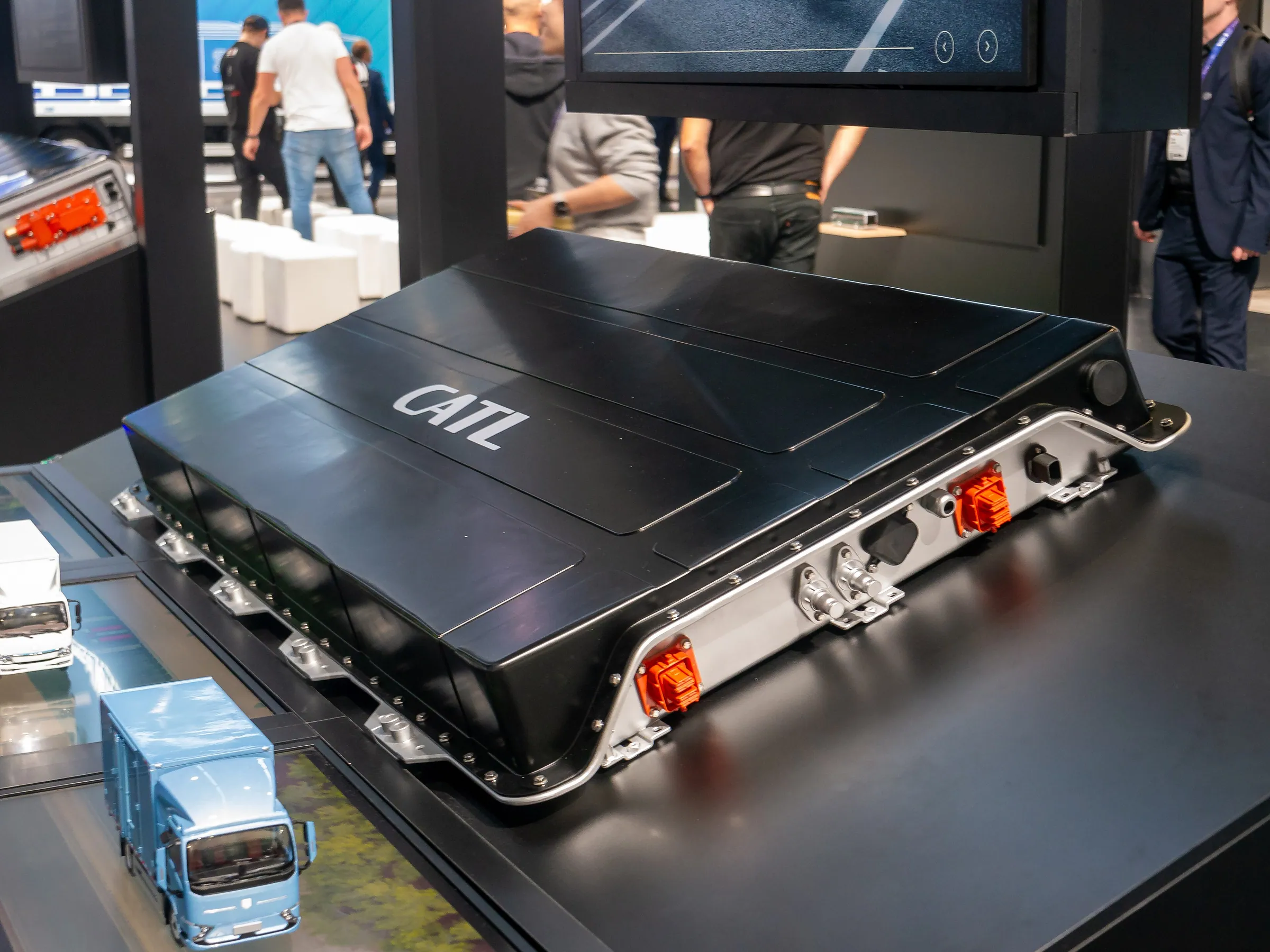
CATL’s chairman, Zeng Yuqun, told Bloomberg in June 2020 that the company was ready to make a battery lasting 16 years and 2 million km, for about 10% more than its ordinary packs, Caixin reported. He didn’t say whether anyone had ordered one.
Tesla’s long-life reputation draws on Jeff Dahn’s lab at Dalhousie University, which Tesla Canada helped fund. In 2019 the lab reported cells with single-crystal NMC532 cathodes that it said could power a car for more than 1.6 million km. Its worked example, at 40°C with a full cycle every day, reached 70% after ten years and 1.2 million km, using 240 mAh laboratory pouch cells. Tesla’s own fleet figures are more modest. Its 2023 Impact Report put the average loss for Model 3 and Model Y Long Range cars at 15% after 200,000 miles, about 320,000 km, and its 2022 report put the Model S and Model X at 12%.
None of the three has published independent fleet data anywhere near a million kilometres, and the Chinese fleet study shows why a pack falls short of its cells. How the packs are built is covered in BYD vs Tesla batteries.
EV battery warranties compared
BYD’s European cover, extended in January 2026 from 200,000 km, runs for eight years or 250,000 km with at least 70% state of health. It applies automatically to cars already sold in the European Economic Area, Switzerland and the UK, except the eTP3 van. No standard warranty in Tesla Mag’s survey of brands sold in France covers more distance. Only Toyota’s extended cover, up to ten years or 1,000,000 km for cars that get an annual check, goes further.
Tesla’s terms, as Tesla Mag read them from an archived page, are eight years and 70%, capped at 160,000 km for the rear-drive Model 3 and Model Y, 192,000 km for Long Range and Performance versions and 240,000 km for the Model S and Model X. MG gives eight years or 100,000 miles in the UK and seven years or 150,000 km in France, also at 70%. Kia’s 2026 models add an 80% step at five years or 100,000 km. Leapmotor publishes eight years or 160,000 km, and neither its Australian site nor Tesla Mag’s survey gives a capacity threshold.
Euro 7 sets a floor for models approved in the EU from 29 November 2026, and for every new car sold from 29 November 2027: 80% of battery capacity after five years or 100,000 km, and 72% after eight years or 160,000 km. Most warranties still pay out only below 70%.
Heat, cold and battery life
Heat ages batteries. In Geotab’s data, cars in hot climates, where more than 35% of days pass 25°C, lost 0.4 percentage points a year more than cars in mild ones. Dahn’s cells, stored full for 1.3 years, lost almost nothing at 20°C and about 3% at 40°C.
Cold mostly costs range for the day. Recurrent’s study of more than 18,000 US cars found the average electric car kept about 80% of its range between 0°C and minus 18°C, and the range returns in warmer weather. LFP does worse in severe cold, InsideEVs notes. In extreme heat or cold, InsideEVs advises warming or cooling the battery before a fast charge.
How to make an EV battery last
Follow the car’s own charging advice first. For LFP cars, Tesla’s manual told owners to keep the limit at 100% even for daily use and to charge fully at least once a week, so the car can estimate its range accurately. Its current manual defers to the touchscreen. Ford asks owners of LFP Mustang Mach-Es to reach 100% at least once a month. Those full charges keep the battery management system calibrated.
They still cost LFP a little. Dahn’s group cycled LFP cells over windows from 0 to 25% up to 75 to 100% and found that a lower average charge meant less fade, whatever the depth of discharge. Charge an LFP car to 100% when the manual asks or the trip needs it, and don’t leave it sitting full for days in summer.
For its nickel-based packs, Tesla’s advice has been 80% or 90% for daily driving and 100% for trips. Geotab found that cars spending more than 80% of their time below 20% or above 80% charge lost 2.0% a year, against 1.4% for cars that mostly stayed between. For long storage, the 2016 study’s advice works out at about half charge or a little below.
Fast charging divides the data. In Geotab’s study, cars that used DC chargers for under 12% of sessions lost 1.5% a year, while cars that fast-charged more often, with over 40% of those sessions above 100 kW, lost 3.0%. Recurrent’s 2023 study of more than 12,500 Teslas found no statistically significant difference between cars fast-charged at least 90% of the time and those under 10%. A former taxi tested in the UK, an LFP Model Y that had taken 32,684 kWh from DC chargers and 36 kWh at home over 111,000 miles, still showed 92% health, InsideEVs reported.
Whose battery is better: our answer
For a buyer who wants the battery most likely to outlast the car, LFP is the better choice, and a BYD or a car with CATL’s LFP cells is the safest bet. LFP lasts more cycles and minds full charges less, and the one same-car comparison in European data, the Swedish Model 3s, put CATL’s LFP cells ahead of LG’s and Panasonic’s nickel cells. BYD backs its cells with more distance than any other standard battery warranty in Tesla Mag’s survey. Its 1.2 million km figure is a laboratory conversion, though, and independent data on BYD packs in Europe barely exists yet, so judge BYD on the 250,000 km warranty, which you can enforce.
LFP isn’t the only sound choice. The best results in Europe’s used-car data belong to Korean cars, led by a nickel-based Kia, and Tesla’s Long Range models average 85% at 320,000 km. If you need the range of a nickel battery, a pack from a maker with a published record will very probably outlast your ownership. Charging habits can matter more than the badge. Geotab projects 88% after eight years for cars that rarely fast-charge and 76% for cars that often fast-charge at high power, a wider gap than separates most of the cars in Carla’s list.
Sources
- Geotab: How long do electric car batteries last? The updated guide to real-world EV battery health, 28 April 2026
- Recurrent: New data: how long do electric car batteries last?, 11 November 2025
- InsideEVs: The facts are in: you shouldn't worry about EV battery replacements, 18 November 2025
- electrive: Battery health of used EVs varies significantly, 2 September 2026
- Charged EVs: Aviloo's independent EV battery report compares battery life in 20 popular EV models, 14 September 2026
- Electrifying.com: How long do EV batteries actually last? Latest research highlights degradation, 3 September 2026
- ingenieur.de: Fast 10.000 E-Auto-Akkus geprüft: diese Modelle verlieren kaum Kapazität (in German), 21 July 2026
- auto motor und sport: Neue Studie zur Batteriegesundheit: die Koreaner liegen vorn (in German), 23 July 2026
- electrive: Minimal battery degradation up to nearly 100,000 km of mileage, 24 March 2026
- EV Database: Kia e-Niro 64 kWh (2018 to 2020)
- InsideEVs: Tesla Model 3 and Model Y lose 15% of battery capacity after 200,000 miles, citing Tesla's 2022 and 2023 Impact Reports, 19 June 2024
- InsideEVs: How much range does a BYD Seal battery lose after 31,000 miles?, May 2026
- InsideEVs: Think fast-charging ruins EV batteries? Look at this 111,000-mile Tesla Model Y, April 2026
- Journal of The Electrochemical Society: Preger et al., Degradation of commercial lithium-ion cells as a function of chemistry and cycling conditions, 2020
- Journal of The Electrochemical Society: Keil et al., Calendar aging of lithium-ion batteries: I. Impact of the graphite anode on capacity fade, 2016
- Journal of The Electrochemical Society: Harlow et al., A wide range of testing results on an excellent lithium-ion cell chemistry to be used as benchmarks for new battery technologies, 6 September 2019
- IOP Publishing: The operation window of lithium iron phosphate/graphite cells affects their lifetime, 21 August 2024
- Physics World: How the operating window of LFP/graphite cells affects their lifetime (ECS webinar with Eniko Zsoldos of Jeff Dahn's group)
- Nature Energy, via Chalmers University of Technology: Zhou, Bian et al., Quantifying the impact of cell-to-cell inconsistency on electric vehicle battery degradation and utilization, 2026
- Electrek: Xiaomi SU7 owner puts 165,000 miles on his EV in 18 months, battery health at 94.5%, 5 February 2026
- BYD Europe: BYD announces EV fleet results at anniversary of green-taxi project, 3 May 2011
- Beijing News: Retirement and battery recycling of Taiyuan's 8,000 electric taxis (in Chinese), 12 April 2024
- electrive: China makes EV battery health more transparent, 3 August 2026
- CarNewsChina: Can you trust your EV's battery health reading? China sets new accuracy rules with 5% error limit, 2 August 2026
- BYD Italia: BYD estende la garanzia della Blade Battery a 8 anni o 250.000 km (in Italian), 19 January 2026
- electrive: BYD extends battery warranty to 250,000 kilometres, 19 January 2026
- CarNewsChina: BYD's Yangwang U7 battery capacity dips 1.3% after 30,000 km and 350+ flash charges in 9 days, 26 August 2026
- The Next Web: BYD charged one car 350 times in nine days, 28 August 2026
- Caixin Global: Tesla supplier CATL boasts new battery can power cars for 1.24 million miles, 10 June 2020
- Tesla Mag: Garantie batterie : ce qu'il faut exiger en 2026, constructeur par constructeur (in French), 21 October 2026, updated 17 November 2026
- MG Motor UK: Warranty
- Leapmotor Australia: Maintenance and warranty
- Kelley Blue Book: Study: the average EV keeps 80% of its range in the cold, 24 January 2025
- InsideEVs: Fast charging vs slow charging: study reveals difference in range degradation, 29 August 2023
- InsideEVs: Tesla recommends charging Model 3 RWD's LFP battery to 100%, 28 December 2021
- InsideEVs: Why these Ford Mustang Mach-E and Tesla batteries should be charged to 100%, 1 January 2026

Saba founded VoltScope and edits every story on it, checking each figure against the sources listed at its foot.
- EV batteries
- Battery degradation
- LFP
- NMC
- BYD
- CATL
- Tesla
- Warranty
- Charging
- Euro 7