Ningde: the small Chinese city where CATL makes a third of the world’s EV batteries
Robin Zeng built CATL, now the world’s biggest maker of electric-car batteries, in his hometown of Ningde, a Fujian city long known for white tea and fish farms. An early BMW contract and a ministry list that kept foreign rivals out helped it grow.
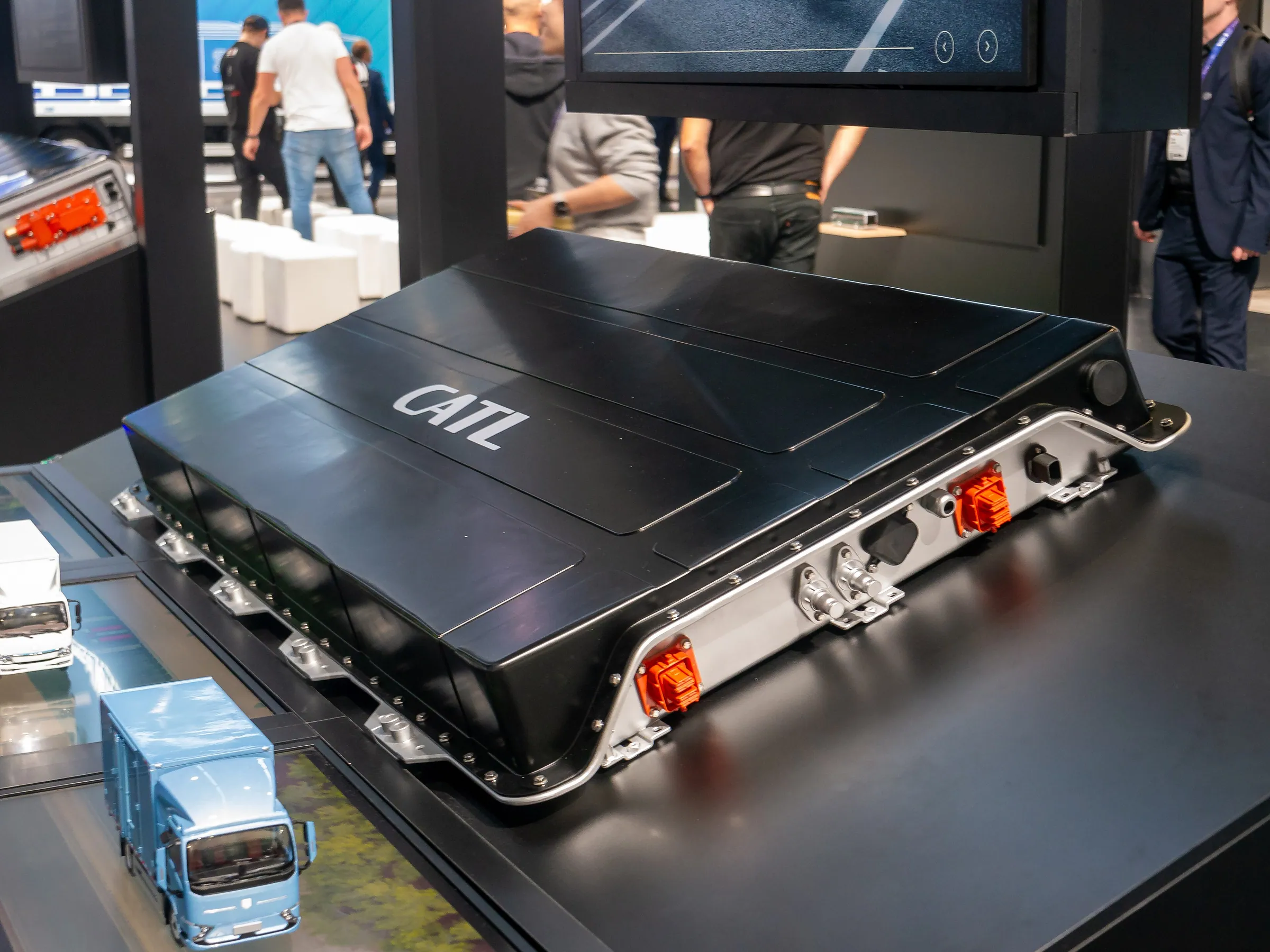
Ningde is on the coast of Fujian province in south-east China, a few hours by train south of Shanghai. CATL, which makes more electric-car batteries than any other company on earth, is based there. More than one in three batteries fitted to electric cars worldwide in 2024 came from CATL, by the count of SNE Research, a Korean firm that tracks battery installations. Tesla, BMW, Volkswagen, Mercedes-Benz, Nio, Li Auto and Xiaomi all buy from it. Carmakers don’t always say who supplies their cells. Many use more than one supplier, so the same model can carry cells from different makers.
The years that made CATL
Robin Zeng (Zeng Yuqun), the engineer who founded CATL, was born near Ningde in 1968 and grew up there. He studied at Shanghai Jiao Tong University and spent his twenties in the electronics factories of Dongguan, in Guangdong, where much of the world’s consumer hardware was being built.
In 1999 he co-founded ATL, which made lithium batteries for phones and music players and did well enough that Japan’s TDK bought it in 2005. Zeng stayed on, and when the team started making batteries for cars, that business was split off in 2011 as a new company, Contemporary Amperex Technology Co. Limited, or CATL. He put its headquarters in his hometown, where the local government was keen to back a native son.
For most of its history Ningde was known for white tea and fish farms. When CATL started out, the city had land and a coastline for shipping, but no tradition of electronics, few engineers and no carmakers. Suppliers followed CATL there, from battery materials to the machines that make the cells, and SAIC, China’s largest car group, opened a plant in Ningde. The prefecture, once counted among Fujian’s poorer corners, became one of China’s best-known industrial cities. The company’s campus there holds its headquarters, its main research centres and some of its biggest factories.
CATL got its early break in 2012, when BMW picked it to supply batteries for the Zinoro 1E, an electric SUV that BMW’s Chinese joint venture built for the local market. The contract mattered more than the car, which sold in small numbers. Meeting a German carmaker’s standards for testing, quality and paperwork forced the young company to grow up fast, and it gave CATL a reference that later customers took seriously.
From 2015 to 2019 China’s industry ministry kept a white list of approved battery suppliers. Only cars with batteries from those companies qualified for the generous purchase subsidies of the time. No foreign battery maker made the list, so Korea’s LG and Samsung and Japan’s Panasonic were effectively shut out of the world’s fastest-growing EV market. Chinese battery makers grew into that space, and CATL grew fastest. We’d argue the list did more for it than any single customer, BMW included. When the list was dropped in 2019, CATL was already too big to dislodge.
SNE Research has ranked CATL the world’s largest EV battery maker every year since 2017. BYD, which makes its own batteries, is second. In 2018 CATL listed in Shenzhen, and in May 2025 it also sold shares in Hong Kong, one of the biggest listings anywhere that year.
CATL outside China
CATL’s plant in Arnstadt, in eastern Germany, started making cells in 2022, and a much larger one is going up in Debrecen, Hungary. A joint venture of CATL and Stellantis is building a plant for lithium iron phosphate (LFP) batteries in Zaragoza, Spain. In the United States, where Chinese battery makers face political resistance, CATL has no plant of its own and licenses its LFP technology to Ford for a plant in Michigan that Ford owns and runs.
Qilin, Shenxing and sodium-ion
CATL makes both of the main kinds of battery chemistry used in electric cars. Nickel-based cells, often called NMC, store more energy for their weight and go into long-range and high-performance cars. LFP cells store a little less, but they cost less, last longer and are harder to set on fire. If you drive an electric car, its cells may well be CATL’s, even if the carmaker never says so. China went big on LFP, for reasons we explain in why China bet on LFP batteries.
CATL gives its newer batteries brand names. Qilin, launched in 2022, packs the cells straight into the battery case with no modules in between, so more of the pack is battery and less of it is packaging. Shenxing, which followed in 2023, is an LFP battery built for fast charging. CATL also makes sodium-ion cells, which use no lithium at all and cope better with cold weather.
Sources
- SNE Research: From Jan to Dec 2024, Global EV Battery Usage Posted 894.4GWh, a 27.2% YoY Growth, 11 February 2025
- SNE Research: From Jan to Dec in 2023, Global EV Battery Usage Posted 705.5GWh, a 38.6% YoY Growth, 7 February 2024
- CATL: Company Profile
- CATL: CATL Announces Listing on HKEX to Power Global Zero-Carbon Economy, 20 May 2025
- CATL: Stellantis and CATL to Invest Up to €4.1 Billion in Joint Venture for Large-Scale LFP Battery Plant in Spain, 10 December 2024
- Ministry of Industry and Information Technology: Standard conditions for the automotive power battery industry (the battery white list), 2015 to 2019
- BMW Brilliance Automotive: Zinoro 1E launch, 2013
Saba founded VoltScope and edits every story on it, checking each figure against the sources listed at its foot.
- CATL
- Ningde
- Robin Zeng
- EV batteries
- LFP
- Qilin
- Shenxing