EV batteries explained: chemistries, makers and costs, and why China leads
More than four in five EV batteries installed in China now use lithium iron phosphate, and Chinese firms make almost three in four worldwide. We explain the chemistries, cell makers, charging speeds, prices and trade rules behind those numbers, with figures to November 2026.
China fitted 99.4 GWh of batteries to new vehicles in October 2026, a monthly record by the count of the China Automotive Battery Innovation Alliance (CABIA), and 86.9% of that capacity was lithium iron phosphate. Worldwide, electric vehicles took 1.2 TWh of batteries in 2025, almost 30% more than in 2024, according to the International Energy Agency (IEA). Chinese companies made almost three quarters of the batteries fitted to electric cars that year.
The battery decides most of what an owner notices about an electric car: how far it goes, how quickly it charges, how it copes with a frozen morning and what the car is worth at eight years old. It’s also where China’s lead is widest. China built 70% of the world’s electric cars in 2025, the IEA says, but more than 80% of the battery cells, about 85% of the cathode material inside them and more than 90% of the anode material. Chinese reports use their own names for much of what follows, and our glossary gives them with pinyin.
LFP vs NMC: the main EV battery chemistries
A lithium-ion cell stores energy by moving lithium ions through a liquid electrolyte between two electrodes. Charging pushes them into the anode, usually graphite, and driving lets them flow back to the cathode, which sets most of the cell’s character and gives each chemistry its name.
In an LFP cell the cathode is lithium iron phosphate, made from cheap, common materials with no nickel or cobalt. NMC cathodes mix nickel, manganese and cobalt, and NCA cathodes nickel, cobalt and aluminium. Chinese reports call both kinds ternary lithium, after their three metals. Nickel lets a cell hold more energy for its weight. The IEA gives 265 watt-hours per kilo for NMC cells, against up to 205 for the latest LFP cells.
LFP wins on price. Averaged across cars and grid storage, an LFP pack cost $81 per kilowatt-hour in 2025 and an NMC pack $128, by BloombergNEF’s count. It’s also much harder to set alight. When BYD launched its LFP Blade cell in March 2020, it drove a nail through one and the surface stayed between 30 and 60°C, Jiemian reported. A nickel-based cell put through the same test reached about 500°C, smoking and in flames.
Those two advantages have made LFP China’s default. It filled 83.4% of the battery capacity installed in Chinese vehicles from January to October 2026, CABIA says. Worldwide it passed 55% of EV batteries in 2025, up from nearly half in 2024. We tell how Chinese makers stuck with a chemistry Western carmakers had written off in why China bet on LFP.
Outside China, nickel still leads. Almost 80% of the EV batteries deployed outside China in 2025 used nickel chemistries, and LFP took more than a tenth of EV battery demand in the European Union, according to the IEA. Cheaper European models are changing that. SNE Research, a Korean firm that tracks installations, says LFP rose to 27.7% of the market outside China in the first nine months of 2026, from 15.8% a year earlier. In November BMW said some of its new Neue Klasse models would use LFP.
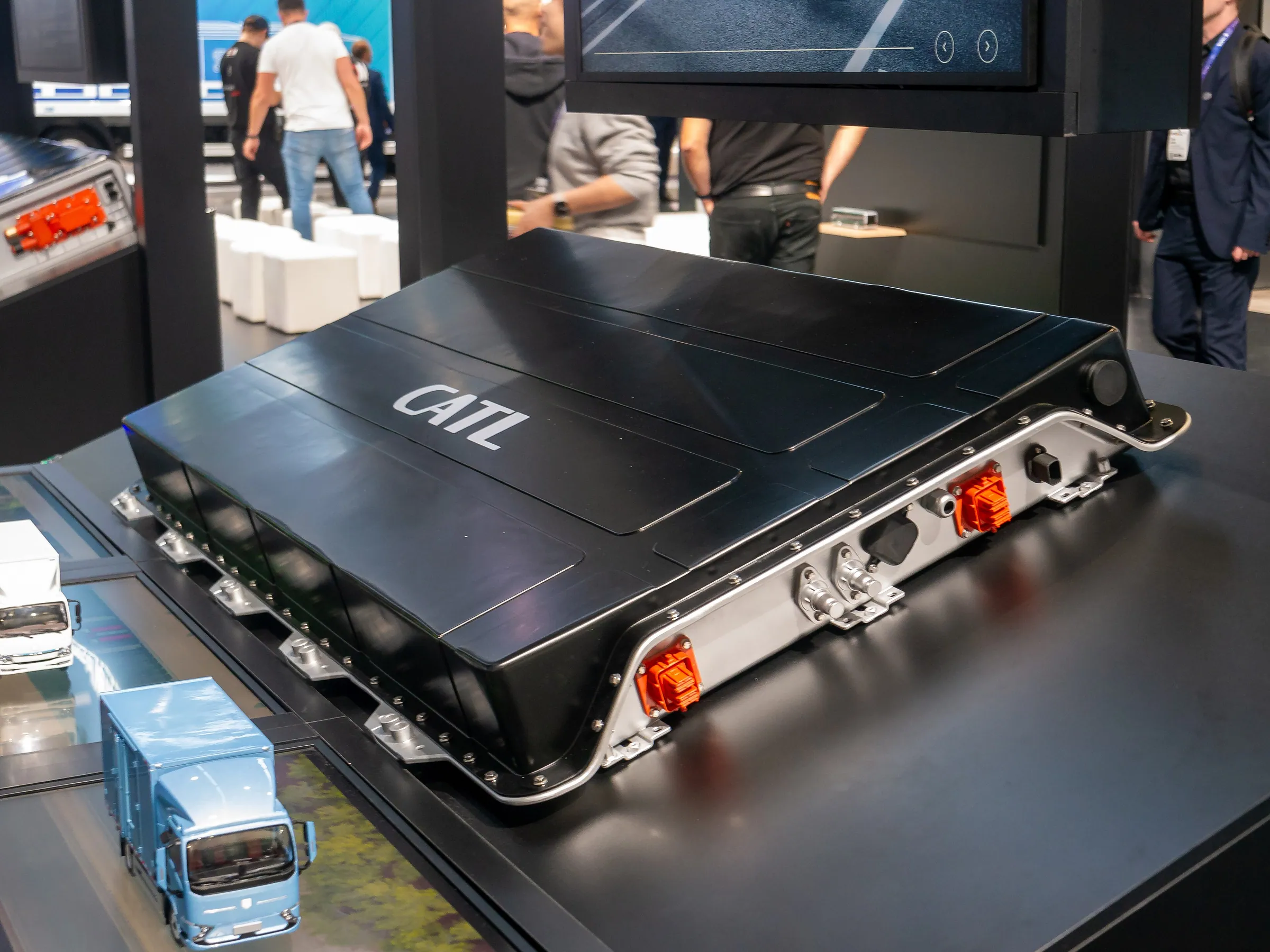
Nickel keeps its place where weight and range matter most. CATL’s third-generation Qilin pack, shown in April 2026, uses NMC cells of 280 Wh/kg. CATL says a pack sized for 1,000 km of range weighs 625 kg, 255 kg less than an LFP pack that would do the same job.
| Chemistry | Cell energy density | Where you’ll find it | Where it stands in 2026 |
|---|---|---|---|
| LFP | Up to 205 Wh/kg | Most EVs in China, cheaper models elsewhere | 83.4% of capacity installed in China, January to October |
| NMC and NCA | About 265 Wh/kg, 280 in CATL’s newest | Long-range and performance cars, most EVs outside China | 16.4% of capacity installed in China, January to October |
| Sodium-ion | Up to 175 Wh/kg | Changan’s first sodium-ion car, with CATL cells | CATL plans full mass production by the end of 2026 |
| Hybrid solid-liquid (semi-solid) | 350 Wh/kg claimed by CATL for its condensed cells | Nio, IM L6 | Already in production cars |
| All-solid-state | 400 Wh/kg targeted by Sunwoda | No production car yet | BYD plans its first car in 2027, Toyota by 2028 |
The energy densities are for single cells. A finished pack stores less per kilo.
Sodium-ion, semi-solid and solid-state batteries
Sodium-ion cells carry sodium ions in place of lithium, which is far scarcer. They hold less energy, but the IEA says they perform much better in the cold than lithium-ion cells, LFP especially. CATL launched its Naxtra sodium-ion cells in April 2025 at up to 175 Wh/kg, and in February 2026 it unveiled, with Changan, what it calls the first mass-produced passenger car to use them. Its 45 kWh pack gives up to 400 km of range, and sales were due to start in mid-2026. CATL says the cells keep more than 90% of their capacity at minus 40°C. In April it said Naxtra had reached gigawatt-hour scale, with full mass production due by the end of 2026. Sodium-ion factories still have just over 1% of the capacity of lithium-ion ones, the IEA says.
Semi-solid cells swap part of the liquid electrolyte for a solid one, and they are already in production cars. WeLion supplies them to Nio, and QingTao to the IM L6. CATL’s newest high-end cell, which it calls condensed and rates at 350 Wh/kg, is a type other makers call semi-solid, CarNewsChina notes.
China tidied up the names in July 2026. Its national standard for EV solid-state batteries, GB/T 43568-2026, drops “semi-solid” and sorts cells into liquid, hybrid solid-liquid and solid-state. To count as solid-state, a cell may lose no more than 0.5% of its weight after six hours of vacuum drying at 120°C, so a cell that sheds more through evaporating liquid doesn’t qualify. The label matters for tax: sodium-ion and solid-state batteries are exempt from China’s new consumption tax on batteries until the end of 2028, and a maker needs test reports showing its products meet the national standards before it can claim the exemption.
No production car yet has an all-solid-state battery, with a fully solid electrolyte. BYD plans to sell its first in 2027 and start mass production in 2030, and Toyota aims to launch its first by 2028, according to the IEA. Chinese suppliers are building pilot lines. Sunwoda connected a 0.2 GWh sample line in August 2026 and is aiming for 400 Wh/kg, and EVE Energy has made 60 Ah prototype cells. Also in August, the International Electrotechnical Commission accepted a Chinese proposal for an international standard on solid-state traction batteries. The IEA expects early solid-state cells to be expensive and to stay in premium cars until the first half of the 2030s.
Prismatic, pouch and cylindrical cells, and cell-to-pack designs
Cells come in three shapes. Prismatic cells are rigid rectangular cans, pouch cells are sealed foil bags and cylindrical cells are metal tubes. Prismatic cells make up more than 60% of EV batteries, the IEA says. In the United States cylindrical cells remain common, as do pouch cells from Korean makers, while Europe is split more evenly between prismatic and pouch.
The newest cylindrical cells are the 46-series, named after their 46 mm diameter. BMW’s Gen6 cells for its Neue Klasse cars come in heights of 95 and 120 mm, and BMW says they charge up to 30% faster and give up to 30% more range than its previous generation. Its existing European suppliers are CATL, which is ramping up a plant in Debrecen in Hungary, and EVE Energy, which has built a factory near BMW’s own plant in the same city. In November 2026 BMW added Samsung SDI for Europe and LG Energy Solution for the United States, with deliveries from the end of the decade.
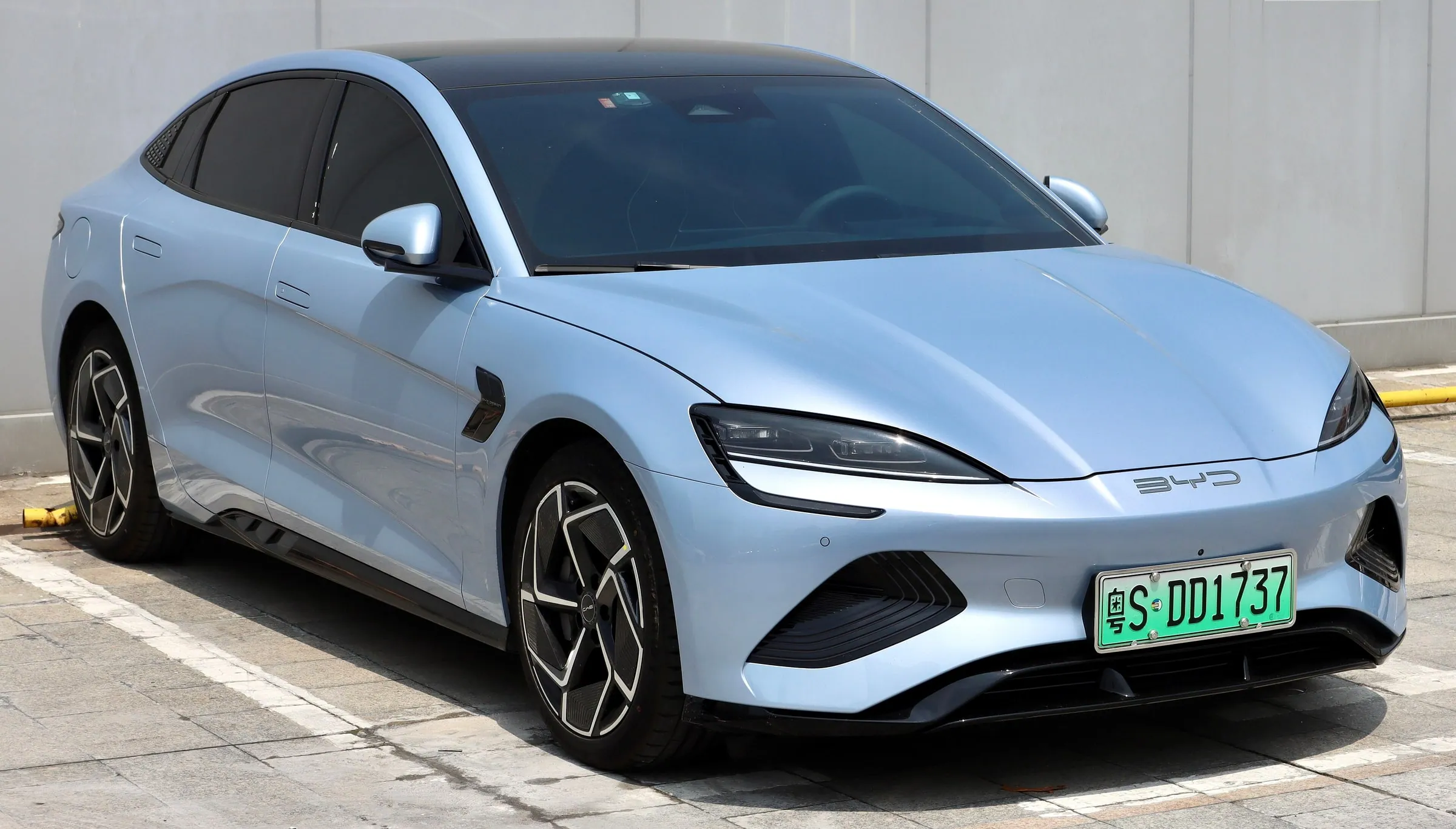
BYD took the flat cell to an extreme. Its Blade, launched on 29 March 2020, is an LFP cell 960 mm long. The cells go into the pack without modules, which raised the pack’s volume utilisation by more than 50% over a conventional LFP pack, according to Jiemian’s report from the launch. The Han saloon, due that June, was the first car to use it. The second-generation Blade, launched in March 2026, has 5% higher energy density.
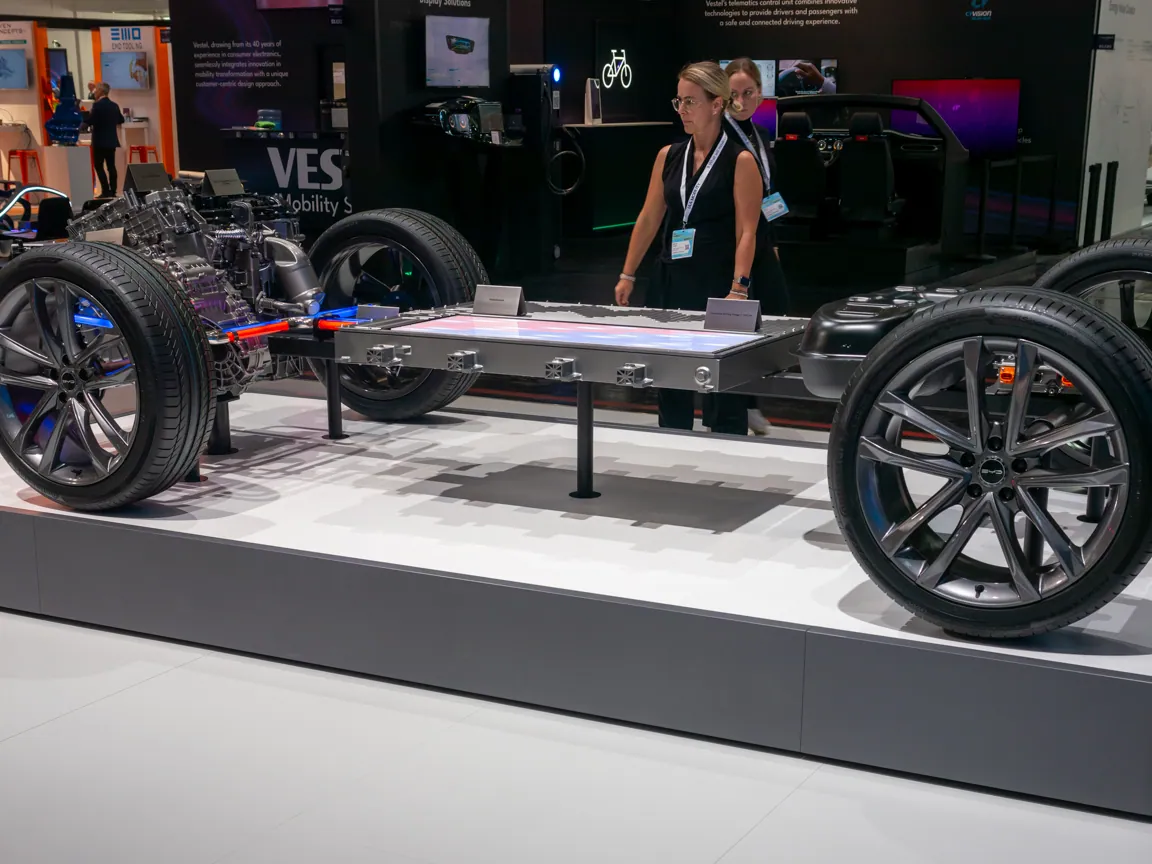
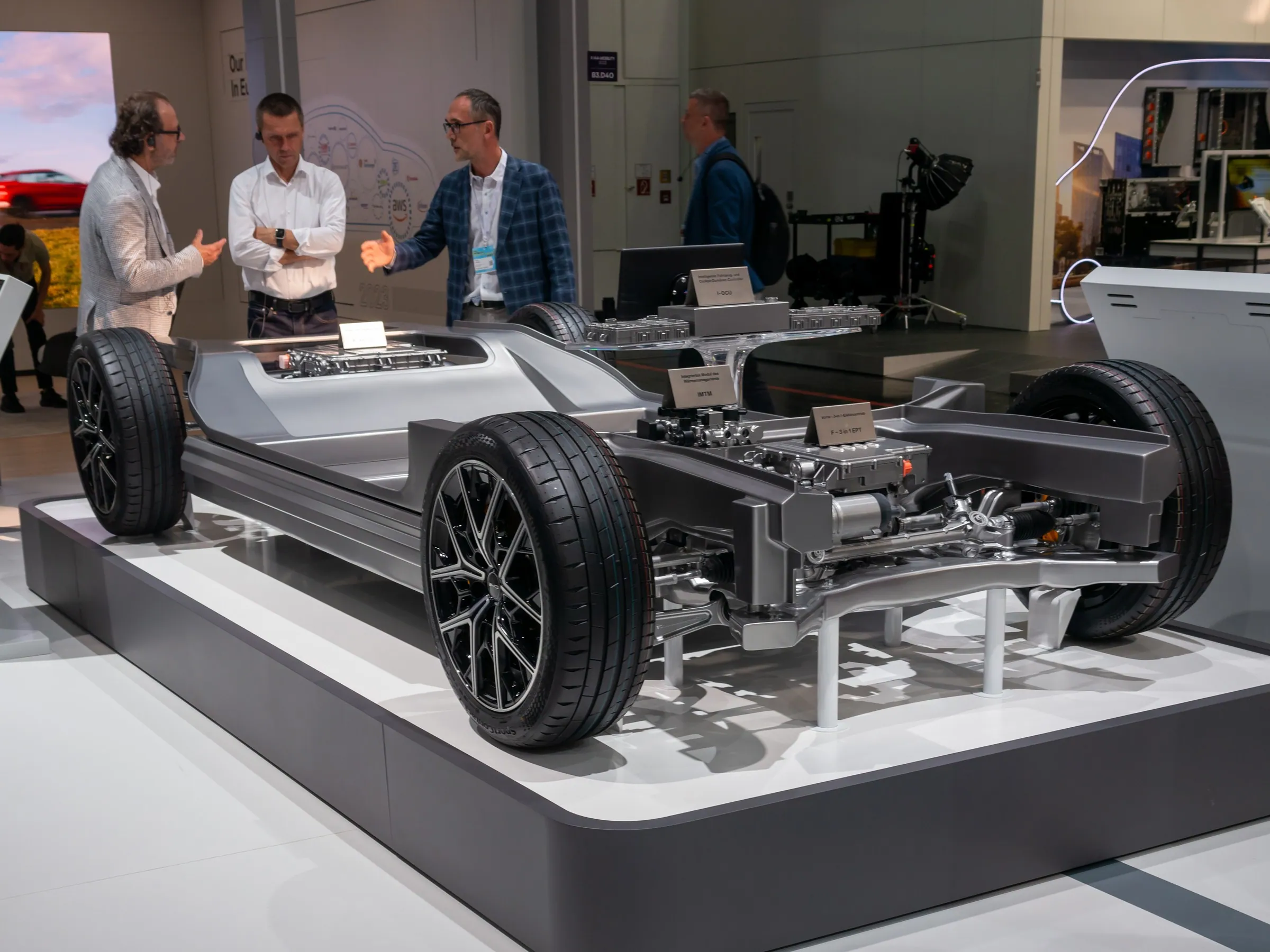
A conventional pack groups cells into modules, each with its own casing, and bolts the modules into a tray. Cell-to-pack designs put the cells straight into the pack, which leaves more room for cells. CATL’s Qilin, the third generation of its cell-to-pack design, used 72% of the pack’s volume when CATL showed it in 2022, and reached 255 Wh/kg at pack level with nickel cells. Cell-to-body designs such as BYD’s, which we compare with Tesla’s packs in BYD vs Tesla batteries, make the pack part of the car’s structure. Power Electronics News says that stiffens the body and lowers the centre of gravity. The IEA notes the drawback: designs without modules complicate recycling.
Who makes EV batteries: CATL, BYD and their rivals
SNE Research counted 994.5 GWh of batteries fitted to electric cars, plug-in hybrids and hybrids worldwide from January to September 2026, 19.7% more than a year earlier. CATL supplied 39.1% and BYD 15.2%. LG Energy Solution was third with 8.2%, ahead of Gotion (5.1%), CALB (5.0%), EVE Energy and Panasonic (3.6% each), SK On (2.8%), SVOLT (2.6%) and REPT (2.4%). The seven Chinese firms in that top 10 held 73.0% between them, 3.5 points more than a year before. Korea’s three big makers held 12.6%, down 4.1 points, and Panasonic was the only Japanese company in the top 10.
China’s own ranking, from CABIA, runs a little differently. In October 2026 CATL had 40.00% of installations, BYD 21.36%, CALB 8.64%, Gotion 6.05% and EVE 5.54%. Further down came REPT with 3.67%, Sunwoda with 3.57% and SVOLT with 2.09%. Over the first ten months CATL held 43.55% and BYD, which makes its batteries through its FinDreams subsidiary, 18.94%. LG Energy Solution, 11th in China in September, fell out of the top 15 in October.
Outside China, CATL held 33.7% in the first nine months of 2026, LG Energy Solution 16.4% and BYD 10.8%. Chinese firms’ share there rose from 43.1% to 56.4% in a year, while Korea’s three big makers fell from 38.2% to 26.5%, and Samsung SDI’s installations dropped 34.4%. Much of the Korean loss came in North America, where their installations halved to 28.1 GWh. SNE puts that down to weaker demand after US tax credits for EVs ended. CATL went the other way in Europe. Its installations there rose 35.4% to 96.8 GWh, and its plant in Debrecen started trial production on 22 September. By the IEA’s count, Chinese producers supplied over half of the EU’s EV batteries in 2025 and just over 5% of America’s.
CATL is even stronger in trucks. It supplied 80% of the batteries in electric trucks sold in China in 2025, the IEA says.
Charging speed, megawatt charging and battery swapping
Battery makers quote charging rates in C. At 1C a battery would fill from empty in an hour, at 4C in 15 minutes and at 10C in six. No battery holds its peak rate from empty to full, so makers usually quote a time from 10% to 80%.
Power is voltage multiplied by current, so a car that charges faster needs more of one or both. BMW’s Neue Klasse runs at 800 volts. BYD’s Super e-Platform, launched in March 2025, runs at 1,000 volts and draws 1,000 amps from BYD’s own chargers: 1,000 kW, or about 400 km of range in five minutes.
In March 2026 BYD launched its second-generation Blade battery, which charges from 10% to 70% in about five minutes and to 97% in nine, on chargers rated at up to 1,500 kW per gun. At minus 20°C or minus 30°C, going from 20% to 97% takes 12 minutes. CATL answered in April with its third-generation Shenxing LFP cells, rated at an equivalent of 10C with peaks of 15C. It says they charge from 10% to 80% in 3 minutes 44 seconds and to 98% in 6 minutes 27 seconds, and keep more than 90% of their capacity after 1,000 full cycles. Both sets of figures are the companies’ own.
BYD is building the chargers to match. It had 10,000 flash-charging stations in 325 Chinese cities by late August 2026, less than six months after launch, and plans 20,000 by the end of the year, including 2,000 on motorways. Nearly a third of its 1.83 million registered users drive other brands, and their cars charge only as fast as their own batteries allow. CarNewsChina reported a Lynk & Co 10 peaking at 430 kW at a BYD station. Hongqi will be the first other brand to use the second-generation Blade and BYD’s flash charging.
Swapping is China’s other answer to charging time. Nio’s battery swap network had 4,236 stations in China on 3 November 2026, 1,077 of them on motorways, and had passed 130 million swaps, lately at more than 110,000 a day. Its fifth-generation stations, opened in August, take cars with different wheelbases, which brought its Firefly brand onto the network. CATL runs a rival network of Choco-Swap stations for carmakers including Changan, Chery and GAC. It passed 2,000 stations in 180 cities on 1 July and aims for more than 3,000 by the end of 2026. Its new standard battery block, launched in April, is an 800-volt, 75 kWh pack.
EV battery cost per kWh
BloombergNEF says battery packs cost more than $1,100 per kilowatt-hour in 2010. By 2020 the average had fallen 89% in real terms, to $137, and in 2025 it reached a record low of $108, with packs for battery electric cars at $99. China was cheapest at $84, a 13% fall in a year. Packs cost 44% more in North America and 56% more in Europe. That gap has widened. In 2022 Chinese packs were 20% cheaper than North American ones and 25% cheaper than European ones, against 30% and 35% in 2025, according to the IEA, which puts battery production costs in Europe and the United States as much as 50% above China’s.
Raw materials made 2026 bumpier. Chinese lithium carbonate cost 73,550 yuan a tonne in October 2025 and 181,500 yuan on 26 January 2026, according to SMM figures quoted by ESS News, which listed the suspension of CATL’s Jianxiawo lithium mine in Jiangxi among the causes. LFP cells for grid storage rose about 22% in six months, to an average of 0.365 yuan per watt-hour in April. LFP feels these swings more than nickel chemistries do, because lithium is a larger share of its cost, “not diluted by nickel or cobalt”, as Adam Megginson of Benchmark Mineral Intelligence put it. By October lithium carbonate was back to about 90,000 yuan a tonne, Mysteel reported, as the Jianxiawo mine moved towards restarting and more ore arrived from abroad. Cell prices fell across nearly every grade in the third quarter, Benchmark says.
How long EV batteries last, and what warranties cover
Geotab, a vehicle telematics company, studied more than 22,700 electric vehicles across 21 models and found they lost 2.3% of their capacity a year on average, which would leave a typical battery with 81.6% after eight years. It calls high-power DC fast charging above 100 kW the single largest stressor. Vehicles that used DC fast chargers for fewer than 12% of their charging sessions lost 1.5% a year. Those that fast-charged more often, with over 40% of it above 100 kW, lost 3.0%. A hot climate added 0.4 points a year.
Europe now sets a floor. From 29 November 2026, new car models approved in the EU under the Euro 7 rules must keep at least 80% of their usable battery energy for five years or 100,000 km, and 72% up to eight years or 160,000 km. The rule extends to every new car from November 2027. MG’s British warranty sets a lower bar: eight years or 100,000 miles, with repair or replacement if capacity drops below 70%.
China’s new mandatory battery standard is about safety. Since 1 July 2026 its GB 38031-2025 standard has required that a battery neither catches fire nor explodes when one of its cells goes into thermal runaway, the chain reaction behind battery fires. The old rule allowed fire as long as the occupants got five minutes’ warning. The new one adds a bottom-impact test and a test after long-term fast charging, and a companion standard requires a physical switch that cuts the high-voltage circuit within one second. LFP, the more thermally stable chemistry, is expected to gain share as a result, CnEVPost reports.
Lithium, graphite and battery recycling
China’s share is highest in materials. In 2025 it made about 85% of the world’s cathode active material and more than 90% of the anode material for electric car batteries, the IEA says, and it produces 75% of the purified phosphoric acid that LFP batteries need. More than 70% of the electric vehicles built outside China rely on batteries or components from China. Graphite, the usual anode material, shows the risk. If trade in battery-grade graphite stopped completely, the IEA reckons more than $300 billion a year of production outside China would be in danger.
Lithium prices swing hard. They rose eightfold in 2021 and 2022, then fell by more than 80%, the IEA says, before more than doubling between early 2025 and early 2026. Cobalt prices have risen by around 130%, largely because of export restrictions in the Democratic Republic of the Congo, the IEA’s 2026 minerals outlook says. LFP uses neither cobalt nor nickel.
China has more than 85% of the world’s battery recycling capacity, by the IEA’s count, and 90% of the capacity to recover materials from old batteries. Worldwide there is more recycling capacity than scrap, because the supply of worn-out batteries hasn’t kept pace. In August 2025 China lifted its ban on imports of high-grade black mass, the shredded mix of electrode materials that recyclers refine.
The EU is writing recycled material into law. From 18 August 2031, EV batteries sold there must contain at least 16% recycled cobalt, 6% recycled lithium and 6% recycled nickel, and from 2036 at least 26%, 12% and 15%.
Battery export controls and tariffs, 2025 to 2026
China exported 349.0 GWh of batteries for vehicles and energy storage from January to October 2026, 53.0% more than a year earlier, CABIA says. In July 2025 Beijing added the technology for making LFP and LMFP cathodes, and for extracting and refining lithium, to its catalogue of technologies restricted for export, so selling that know-how abroad needs a licence. Export tax rebates on batteries fell from 9% to 6% in April 2026 and end on 1 January 2027, a move Caixin linked to efforts to ease a price war and overcapacity. Since 1 September lithium-ion batteries have also paid a 2% consumption tax, ending an exemption that dated from 2015, and the rate doubles to 4% in September 2027. In September a pause on approving new cell capacity, first applied to grid-storage batteries, was extended to EV cells while the government reviews how much battery capacity the country has, Benchmark reports.
The United States raised its Section 301 tariff on Chinese lithium-ion EV batteries from 7.5% to 25% in 2024, and on other lithium-ion batteries to 25% in 2026, alongside a 100% tariff on Chinese electric cars.
In October 2025 China announced export controls on lithium-ion cells and packs of 300 Wh/kg or more, LFP cathode material above set density and capacity levels, precursors for NCM and NCA cathodes, and graphite anode material, along with the equipment and technology used to make them. The 300 Wh/kg line covers high-nickel cells, the IEA notes, while the latest LFP cells reach up to 205. Beijing suspended the controls for a year on 7 November 2025. On 9 November 2026, a day before that pause ran out, the commerce ministry extended it to 10 January 2027, part of a wider pause in trade measures with the United States that also suspends a 24% Chinese tariff on American goods. It gave no reason for choosing that date.
Sources
- China Automotive Battery Innovation Alliance, via CnEVPost: China's October power battery installations hit record 99.4 GWh as LFP share reaches 86.9%, 19 November 2026
- China Automotive Battery Innovation Alliance, via CnEVPost: Top battery makers' share in China in October 2026: CATL 40.00%, BYD 21.36%, 19 November 2026
- SNE Research, via CnEVPost: Global EV battery market share in January-September 2026: CATL 39.1%, BYD 15.2%, 2 November 2026
- SNE Research, via CnEVPost: CATL, BYD gain EV battery share outside China as Korean rivals lose ground, 5 November 2026
- The Herald Business: Chinese battery makers grab 73% market share as Korean trio loses ground in North America, 2 November 2026
- IEA: Global EV Outlook 2026: Electric vehicle batteries
- IEA: Global EV Outlook 2026: Manufacturing and trade
- IEA: Global battery markets are growing strongly, and so are the supply risks, 13 February 2026
- IEA: Global Critical Minerals Outlook 2026: Executive summary
- IEA: Global Critical Minerals Outlook 2025: Executive summary
- IEA: Section 301, Trade Act 1974, policies database
- BloombergNEF: Lithium-ion battery pack prices fall to $108 per kilowatt-hour despite rising metal prices, 9 December 2025
- BloombergNEF: Battery pack prices cited below $100/kWh for the first time in 2020, while market average sits at $137/kWh, 16 December 2020
- ESS News: China's 314 Ah storage cell prices climb more than 20% in six months, 22 April 2026
- Mysteel: Lithium prices hinge on spots market and 1Q27 orders, despite sustained monthly destocking, 12 November 2026
- Benchmark Mineral Intelligence: Lithium cost pass-through drives volatile quarter for energy storage cells: Cell Price Review Q3 2026, 9 October 2026
- Benchmark Mineral Intelligence: China extends pause on rare earth and battery export controls until 2027, 10 November 2026
- Tech Times: China extends export controls pause on batteries, graphite, diamond saws, rare earths into January, 10 November 2026
- electrive: China restricts battery cathode material technology exports, 15 July 2025
- Caixin Global: China to eliminate export tax rebates for solar and batteries by 2027, 10 January 2026
- CnEVPost: China to impose consumption tax on lithium batteries, exempting sodium-ion and solid-state cells, 17 July 2026
- CnEVPost: China's toughest battery safety rules take effect in July, raising bar for makers, 30 June 2026
- Battery Design: GB/T 43568-2026, Electric vehicle solid-state battery, Part 1: Terminology and classification
- CarNewsChina: China introduces first national standard for solid-state batteries for public comment, 31 December 2025
- CarNewsChina: China pushes global solid-state EV standard as domestic pilot lines scale, 2 September 2026
- CnEVPost: CATL's sodium-ion batteries begin deployment in production-ready passenger vehicles, 5 February 2026
- CATL, via AAP: CATL unveils six major innovations: multi-chemistry systems to redefine new energy mobility experience, 22 April 2026
- CarNewsChina: CATL unveils 3rd-gen Qilin with 3,000kW output and condensed matter battery at 350Wh/kg, 21 April 2026
- E-Mobility Engineering: CATL launches cell-to-pack battery and claims highest integration level so far, 2022
- BMW Group: Round battery cells for the Neue Klasse, 9 September 2022
- electrive: BMW to source battery cells from LGES and Samsung SDI, 9 November 2026
- Jiemian: BYD officially launches the Blade battery (in Chinese), 30 March 2020
- Battery Design: BYD Blade
- Power Electronics News: The Blade that cuts ahead: inside BYD's battery formula for leading the EV race, 24 July 2025
- FinDreams Battery: Company website
- ArenaEV: BYD starts rollout of 1MW charging network, 25 February 2026
- S&P Global Mobility AutoTechInsight: BYD launches next-generation Flash Charging technology, can deliver power output of up to 1,500 kW, 9 March 2026
- CarNewsChina: BYD unveils Blade Battery 2.0: 10-70% in 5 mins, 10-97% in 9 mins, and 20,000 flash charging stations in 2026, 5 March 2026
- CarNewsChina: BYD hits 10,000 Flash Charging stations in 6 months with 1.83M users and 33% non-BYD, 28 August 2026
- CnEVPost: Nio adds 10 million battery swaps in 88 days, taking total past 130 million, 3 November 2026
- CnEVPost: CATL's Choco swap stations top 2,000 as roll-out speeds up, 1 July 2026
- Geotab: How long do electric car batteries last? The updated guide to real-world EV battery health, 28 April 2026
- EUR-Lex: Regulation (EU) 2024/1257 on the type-approval of motor vehicles and engines (Euro 7)
- EUR-Lex: Regulation (EU) 2023/1542 concerning batteries and waste batteries
- MG Motor UK: Warranty

Saba founded VoltScope and edits every story on it, checking each figure against the sources listed at its foot.
- EV batteries
- LFP
- NMC
- Sodium-ion
- Solid-state
- CATL
- BYD
- Charging
- Battery swap
- Battery prices
- Recycling
- Export controls