BYD’s God’s Eye: what it does on a 69,800-yuan car, and where the promises stop
The cheapest version of BYD’s driver assistance can steer a Seagull along a motorway route and park it, and in China BYD pays for some of the system’s mistakes. Buyers abroad get less driver assistance and none of the guarantees.
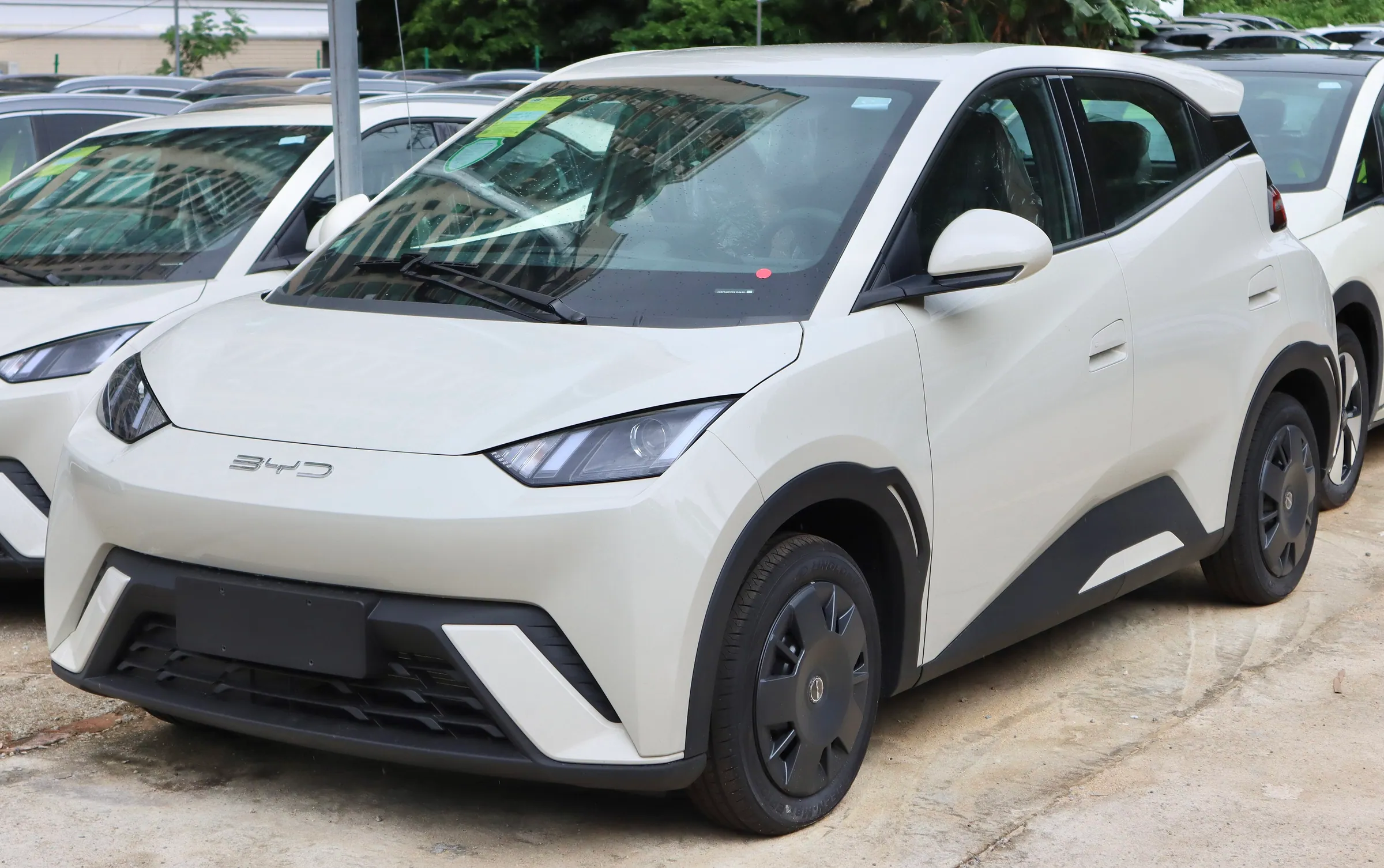
BYD launched God’s Eye, its driver-assistance system, in Shenzhen on 10 February 2025 and said every model it made would get it. The cheapest of the first 21 models was the Seagull hatchback, which came with the basic version for 69,800 yuan, the same price as before.
Citic Securities had expected BYD to add about 3,000 yuan to its prices and to fit the system only to cars costing 150,000 yuan or more. Systems like it had usually come on cars priced around 200,000 yuan, Caixin noted, and Tesla was charging Chinese owners a one-off 64,000 yuan for its Full Self-Driving software, a little less than the price of a whole Seagull. On the launch livestream BYD’s founder, Wang Chuanfu, said the company was “starting an era where autonomous driving is for everyone”, as the Financial Times translated it.
What the basic version does
God’s Eye comes in three versions. A, for BYD’s luxury brand Yangwang, and B, for its Denza brand and some BYD flagships, carry lidar, a laser sensor that measures distance, and can follow a navigation route through cities as well as on motorways. The Seagull got C, which has no lidar. It sees through 12 cameras, five radars and 12 ultrasonic sensors, and its computer is rated at about 100 TOPS (trillion operations per second). At launch it could navigate on motorways only, with city driving expected later through an over-the-air software update.
The motoring writer Wolfgang Gomoll tried a Seagull with God’s Eye C on a rainy day in Xi’an, in a test published in July 2025. Turquoise lights in both door mirrors showed other drivers when the system was steering. BYD called it Level 2.5, half a step up from Level 2, the industry’s term for systems that steer and brake while the driver supervises.
Gomoll found that the car did most of the driving itself. On the motorway it would follow the route set in the navigation, pull out to pass slower cars and tuck back in, and move over from the left lane about two kilometres before its exit. It would steer for up to ten minutes before red hands on the display asked the driver to take the wheel. It could brake to a stop from 100 km/h, reverse into a tight space, park nose first after an update and park while the driver stood outside with a phone. It wouldn’t go faster than 130 km/h, and it gave up when the toll booths came into view. It wouldn’t drive in town at all. When Gomoll asked to try it in the city, BYD’s staff said no: “Too much traffic.”
The rules and BYD’s guarantees
Seven weeks after the launch, three university students died when a Xiaomi SU7 hit a concrete barrier on an expressway in Anhui, seconds after its driver took over from the car’s navigation assist. In mid-April the industry ministry, MIIT, called in dozens of carmakers. According to minutes reported by CarNewsChina, they were told to stop using terms such as “autonomous driving” and “intelligent driving” and to describe systems by level, as in “L2 assisted driving”.
A draft national standard that September said that “L2 systems are not autonomous driving systems, as drivers must remain continuously engaged in dynamic driving tasks.” The final version, GB 47955-2026, takes full effect on 1 January 2027. It sorts systems into three types (single-lane, multi-lane and navigation) and leaves no room for in-between labels such as “L2.5”.
BYD’s boldest move came in July 2025, when it began putting its own money behind the software. It announced a parking update for the B and C versions, which it called “L4” parking, and said it would pay for repairs, third-party damage and injuries caused by malfunctions or software errors in the parking system, where the car is found at fault. Owners claim from BYD’s after-sales service instead of their insurer, and their premium doesn’t rise the following year. BYD says use of self-parking rose from 21% to 93% once the guarantee was in place.
In May 2026 it made a similar promise for city driving, on the lidar versions only: “if a legally-liable accident occurs while a user is operating the Urban NOA function in compliance with regulations, BYD will directly cover all resulting economic losses.” NOA stands for navigate on autopilot, and Urban NOA is BYD’s city navigation. The cover lasts a year, for new cars and for existing ones once they update to version 5.0 of the software. A Seagull with the camera-only C version gets the parking guarantee and not this one.
Wang said city navigation was a safety feature that shouldn’t depend on the base price of the car, and BYD made the lidar version an option on every model for 12,000 yuan. That price had gone up from 9,900 yuan on 1 May, because of what BYD called “significant increases in global storage hardware costs”. The 2026 Seagull offers it on two trims, with the lidar on the roof: the Flying costs 85,900 yuan without it and 97,900 yuan with it.
The safety figures BYD quotes are its own. In May 2026 its senior vice president, Yang Dongsheng, said cars using God’s Eye had a sixth as many serious accidents per kilometre as human drivers, counting airbag deployments, and that parking scrapes had fallen to nearly one-fiftieth. By the end of that month BYD counted more than 3.15 million cars on the road with its driver assistance.
What buyers outside China get
The Seagull is sold in Europe as the Dolphin Surf and elsewhere as the Dolphin Mini, and BYD’s guarantees don’t go with it: both apply only in the Chinese market.
In March 2026 Geely’s chief technology officer, Li Chuanhai, said European rules allowed navigation assist only on motorways. Denza plans to bring city navigation to Europe in 2027 as an over-the-air update for its Z9 GT grand tourer, once the system passes type approval under UN Regulation 171. That would make it the first BYD car in Europe with God’s Eye city navigation. Tesla is further along. In April 2026 the Dutch regulator, RDW, gave Tesla’s FSD Supervised a provisional approval, valid only in the Netherlands while other EU countries decide, and stressed that the system is “NOT autonomous or self-driving”.
In Australia, where Tesla has offered FSD Supervised since September 2025, The Driven reported in May 2026 that most BYD models came with cruise control and assisted steering, and no city driving assistance.
Sources
- TechNode: BYD's God's Eye launch and Seagull pricing, 11 February 2025
- Engadget (citing the Financial Times): BYD promises to make all of its models self-driving capable, 11 February 2025
- Caixin Global: How BYD's smart driving feature served as a price cut, 22 February 2025
- CarNewsChina: BYD released the new God's Eye driving assistance system, 10 February 2025
- Blick: Wolfgang Gomoll's first test of God's Eye in a BYD Seagull (in German), August 2025
- adt.media: God's Eye by BYD in practical test, July 2025
- CarNewsChina: First fatal accident involving Xiaomi SU7 claims three lives on Chinese highway, 1 April 2025
- Caixin Global: State reins in autonomous driving hype after deadly crash, 18 April 2025
- CarNewsChina: China's MIIT tightens regulations on autonomous driving features, 17 April 2025
- China Daily: MIIT draft mandatory standard for L2 driver assistance, 17 September 2025
- Gasgoo: China issues first mandatory national standard for L2 combined driving assistance, July 2026
- CarNewsChina: BYD announces L4 autonomous parking feature, promises full liability for any losses in China, 9 July 2025
- InsideEVs: BYD's self-parking guarantee, 9 July 2025
- Paul Tan's Automotive News: BYD updates God's Eye with Level 4-equivalent park assist, 16 July 2025
- BYD: Full damage coverage for intelligent parking and Urban NOA, 28 May 2026
- BYD: Liability for intelligent parking and assisted driving (German press release), 1 June 2026
- CnEVPost: BYD expands its driver-assistance push with a liability guarantee, 29 May 2026
- CarNewsChina: BYD raises the price of its God's Eye B lidar option, 28 April 2026
- Electrek: BYD launches the 2026 Seagull with optional lidar, 12 May 2026
- CleanTechnica: BYD's technology strategy and self-parking figures, 29 May 2026
- Autohome: Yang Dongsheng on God's Eye safety data (in Chinese), 22 May 2026
- Automotive World: Denza confirms urban driving assist for Europe in 2027, 13 October 2026
- CarNewsChina: Denza Z9 GT to become first BYD car with God's Eye navigation in Europe, 13 October 2026
- CarNewsChina: Geely becomes first Chinese carmaker to receive EU certification for driver assistance, 17 March 2026
- RDW: European type approval for Tesla with provisional validity in the Netherlands, 10 April 2026
- The Driven: God's Eye: BYD unveils its next generation of driver assistance, 30 May 2026
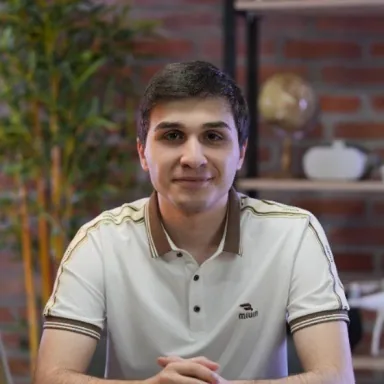
Saba founded VoltScope and edits every story on it, checking each figure against the sources listed at its foot.
- BYD
- God's Eye
- Seagull
- Driver assistance
- Lidar
- Denza