China’s robotaxi companies are going abroad to sell the driver
Shut out of America, Baidu, Pony.ai and WeRide are growing abroad as suppliers of self-driving software, with Uber and local firms bringing the riders and often the cars. It works best in the Gulf so far, and Europe still counts its trips in thousands.
At 8.57pm on 31 March, police in Wuhan began getting reports of robotaxis blocking the road. Baidu’s driverless ride-hailing service, Apollo Go, had stalled across the city. Police said at least 100 cars were affected, according to Reuters, and Wired reported that some had stopped in the fast lane. Passengers in some of them were stuck for up to two hours. The police blamed a suspected system failure and said nobody was hurt. Baidu didn’t say what went wrong.
The day before, Baidu had opened its fully driverless service in Dubai to the public. It went on to have a hard spring at home and a busy summer abroad, where it and its main Chinese rivals, Pony.ai and WeRide, mostly provide the driving and leave partners to find the riders and, often, to pay for the cars.
Wuhan
In late April Bloomberg, citing people familiar with the matter, reported that China had stopped issuing new robotaxi permits. No company could add cars or move into a new city, and Baidu’s service in Wuhan was suspended while local officials investigated. Shares in Pony.ai fell 6% on the news, and WeRide’s 3%.
Baidu’s own figures show the effect without naming the city. Apollo Go gave 3.2 million fully driverless rides in the first quarter, and more than 350,000 in its busiest week, in March. For the second quarter Robin Li, Baidu’s chief executive, told analysts the total was “around 1 million”, held down by “operational adjustments in certain domestic cities due to regulatory considerations”. Baidu’s results releases have given no ride total since.
Permits were issued again after an industry-wide safety review ended in late June, Bloomberg reported in July. Hundreds of Baidu’s cars had been pulled off the roads in Wuhan, where it had planned to run 1,000 of its sixth-generation RT6 robotaxis by the end of 2024. From early July, residents posted videos of Apollo Go cars back on the streets, some with safety drivers inside.
On the November earnings call Li spoke about Shenzhen, where Apollo Go’s driverless rides rose about 170% from the second quarter to the third. “We are entering a new phase of development,” he said, “with our efforts concentrated on cities with the strongest demand and commercial potential.”
Dubai
Dubai wants a quarter of its transport to be autonomous by 2030. Uber customers there can be matched with an Apollo Go car, which a third-party operator, New Horizon, looks after, and between July and September Baidu doubled its Dubai fleet. Li now calls Apollo Go “Dubai’s largest fully driverless ride-hailing service provider”.
None of the three can count on America. From model year 2027, a US Commerce Department rule bans the import and sale of cars whose automated-driving software has a “sufficient nexus” to China. Baidu’s 2025 deal with Uber, for “thousands” of cars, covers markets “outside the US and the Chinese mainland”.
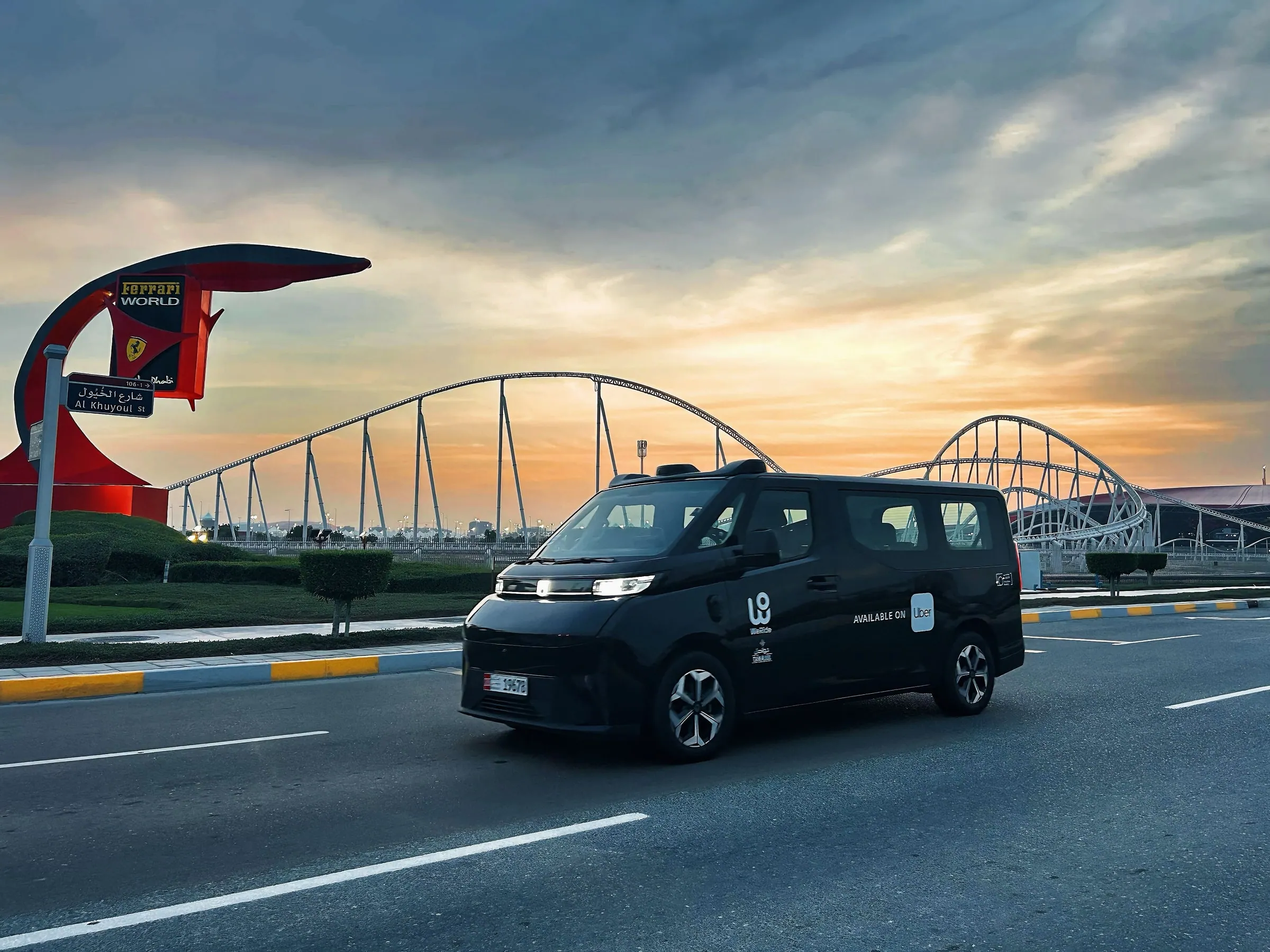
WeRide, which runs fully driverless cars with Uber in Abu Dhabi and Dubai, sums up its foreign business in one line: it “provides autonomous driving technology and remote assistance, while local partners provide fleet investment”. Remote assistance means staff at screens who help a car that gets stuck. It’s close to how Huawei sells its technology to carmakers in China. WeRide has about 600 cars in the Middle East, up from about 400 at the end of July, out of roughly 4,100 self-driving vehicles worldwide. Yet more than 90% of its robotaxi revenue in the third quarter came from abroad. “Operating driverless fleets in foreign markets is challenging,” Tony Han, its chief executive, said last week, “which is exactly why it is becoming our long-term moat.”
The Gulf has its own risks. At the start of March, after Iranian missile strikes across the region affected the UAE, Apollo Go and WeRide halted their Dubai fleets for most of the month.
Zagreb
Europe works on a smaller scale. Pony.ai opened what it calls Europe’s first commercial robotaxi service in Zagreb on 8 April, with Uber and with Verne, which owns the cars and runs them day to day. Riders book and pay in Verne’s app, and the service area includes the airport. By the end of October the cars had driven more than 200,000 km and made “several thousand passenger trips”. In its busiest week in March, Apollo Go averaged about 50,000 rides a day, so Zagreb’s total would fit into a few hours of that. Pony.ai hasn’t said whether anyone sat behind the wheel in the spring. Its first test rides with nobody in the driver’s seat, for invited passengers, came in September.
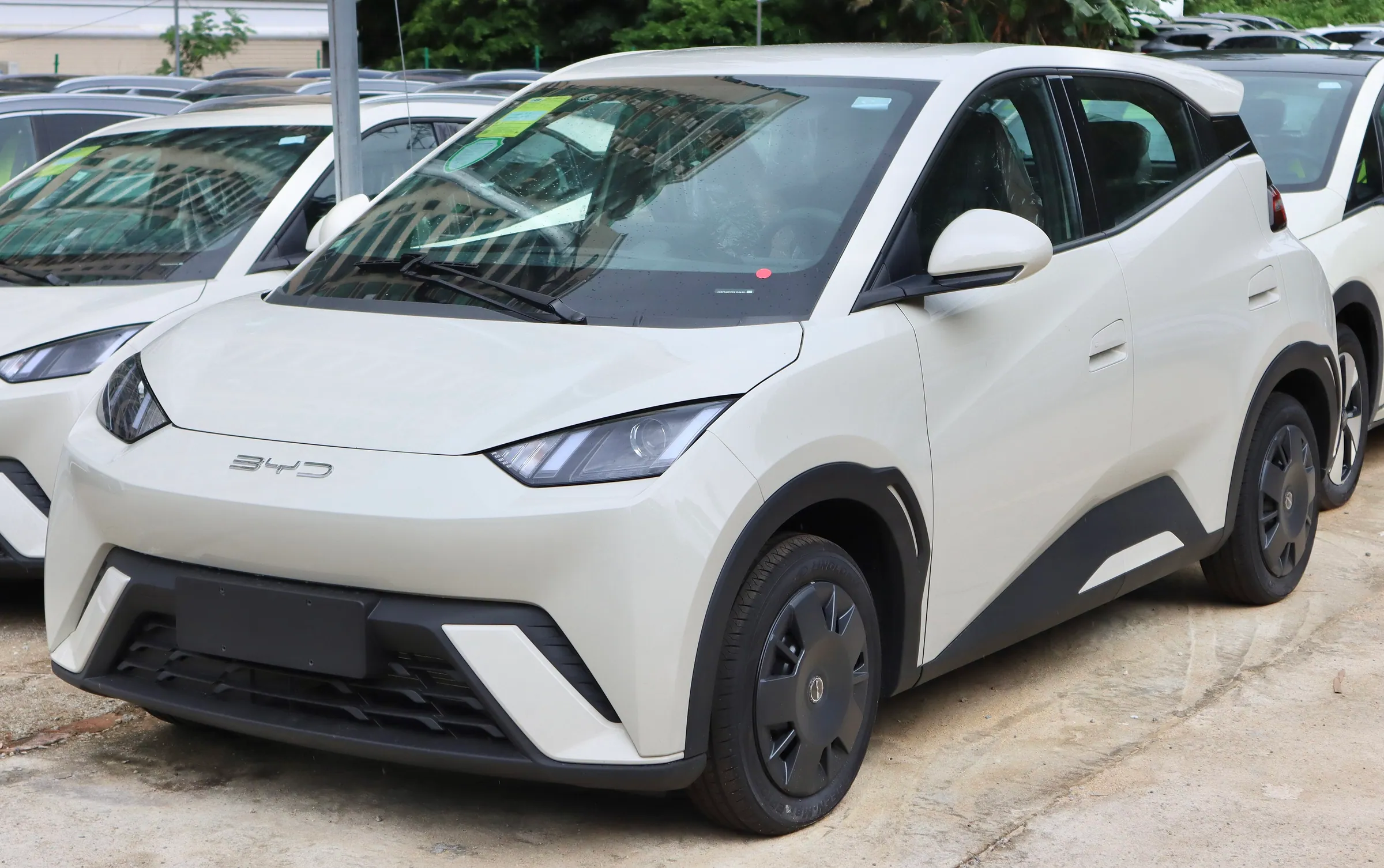
The model needs partners willing to buy cars, and the cars are cheap. Baidu put the invoice cost of the RT6, which carries 40 sensors including five lidars, at 204,600 yuan in 2024, less than a Xiaomi SU7. Pony.ai says its 2027 robotaxi for China, driving kit included, will cost under 230,000 yuan, below the starting price of a China-built Tesla Model 3. It also says its Shenzhen cars became profitable per vehicle in February, averaging 338 yuan of net revenue a day from 23 rides, about 15 yuan a ride. It hasn’t published a cost breakdown, and its first profitable quarter, the last of 2025, came mostly from a windfall on an early investment.
London
In London, Baidu runs into Waymo. Its RT6s have been testing in the borough of Brent since 28 July with safety operators in the driver’s seat, and its partners there are Uber and Freenow, the taxi app Lyft bought in 2025. Waymo began testing in London in April, also with safety operators, and Uber has announced plans for a London service with Wayve.
We think the Chinese companies’ reliance on partners is a weakness here. Uber has robotaxi deals with all three of them and with Wayve, and its app decides whose car turns up. Waymo, which gave 500,000 paid rides a week in 10 American cities in March, plans to expand into Canada, Germany, Singapore and Spain, Alphabet’s chief executive, Sundar Pichai, said in October. WeRide is already in two of those countries. In September it received, with Uber and a fleet operator called Avomo, what it calls Spain’s first permit for self-driving passenger cars, for testing that starts with mapping around Madrid. By the end of that month it had given more than 20,000 rides with Grab in Singapore.
Baidu and Freenow said in July that they expect to invite the public in London to hail their robotaxis in 2027, pending regulatory approval.
Sources
- Caixin Global: Baidu's Apollo Go robotaxis suffer mass malfunction on Wuhan roads, 2 April 2026
- TechCrunch: System failure paralyzes Baidu robotaxis in China, 1 April 2026
- CnEVPost, citing Bloomberg: China suspends new robotaxi permits after Baidu outage, 29 April 2026
- CnEVPost, citing Bloomberg: China resumes issuing robotaxi licences, 23 July 2026
- Baidu: First quarter 2026 results, SEC Form 6-K, 18 May 2026
- TradingKey: Baidu second quarter 2026 earnings call transcript, 18 August 2026
- Baidu: Second quarter 2026 results, SEC Form 6-K, 18 August 2026
- Baidu: Third quarter 2026 results, SEC Form 6-K, 16 November 2026
- gloom.sh: Baidu third quarter 2026 earnings call transcript, 16 November 2026
- CarNewsChina: Baidu launches sixth-generation robotaxi, the Apollo RT6, 15 May 2024
- CnEVPost: Baidu's Apollo Go starts driverless commercial operations in Dubai, 31 March 2026
- CnEVPost: Baidu partners with Uber to bring Apollo Go service to Dubai, 10 February 2026
- CnEVPost: Chinese robotaxi firms halt Dubai operations amid Middle East conflict, 1 March 2026
- US Bureau of Industry and Security: Commerce finalizes rule to secure connected vehicle supply chains from foreign adversary threats, 14 January 2025
- CnEVPost: Baidu and Uber to deploy robotaxis globally, 15 July 2025
- WeRide: Third quarter 2026 results, 20 November 2026
- CnEVPost: Pony.ai launches commercial robotaxi service in Croatia, 8 April 2026
- Pony.ai: Third quarter 2026 results, SEC Form 6-K, 18 November 2026
- Pony.ai, via AAP: Pony.ai at Auto China 2026: robotaxi cost and Toyota plans, 24 April 2026
- CnEVPost: Pony.ai reaches per-vehicle profitability in a second Chinese city, 2 March 2026
- CnEVPost: Pony.ai posts its first quarterly profit, 26 March 2026
- TechCrunch: Lyft and Baidu enter London's robotaxi battleground as testing begins, 28 July 2026
- CnEVPost: WeRide and Uber to launch a commercial robotaxi service in Spain, 2 June 2026
- TechCrunch: Waymo's ridership in one chart, 27 March 2026
- Alphabet: Sundar Pichai's remarks on third quarter 2026 results, 28 October 2026

Saba founded VoltScope and edits every story on it, checking each figure against the sources listed at its foot.
- Robotaxi
- Baidu
- Apollo Go
- Pony.ai
- WeRide
- Uber
- Self-driving