Why so many Chinese electric cars have a bump on the roof
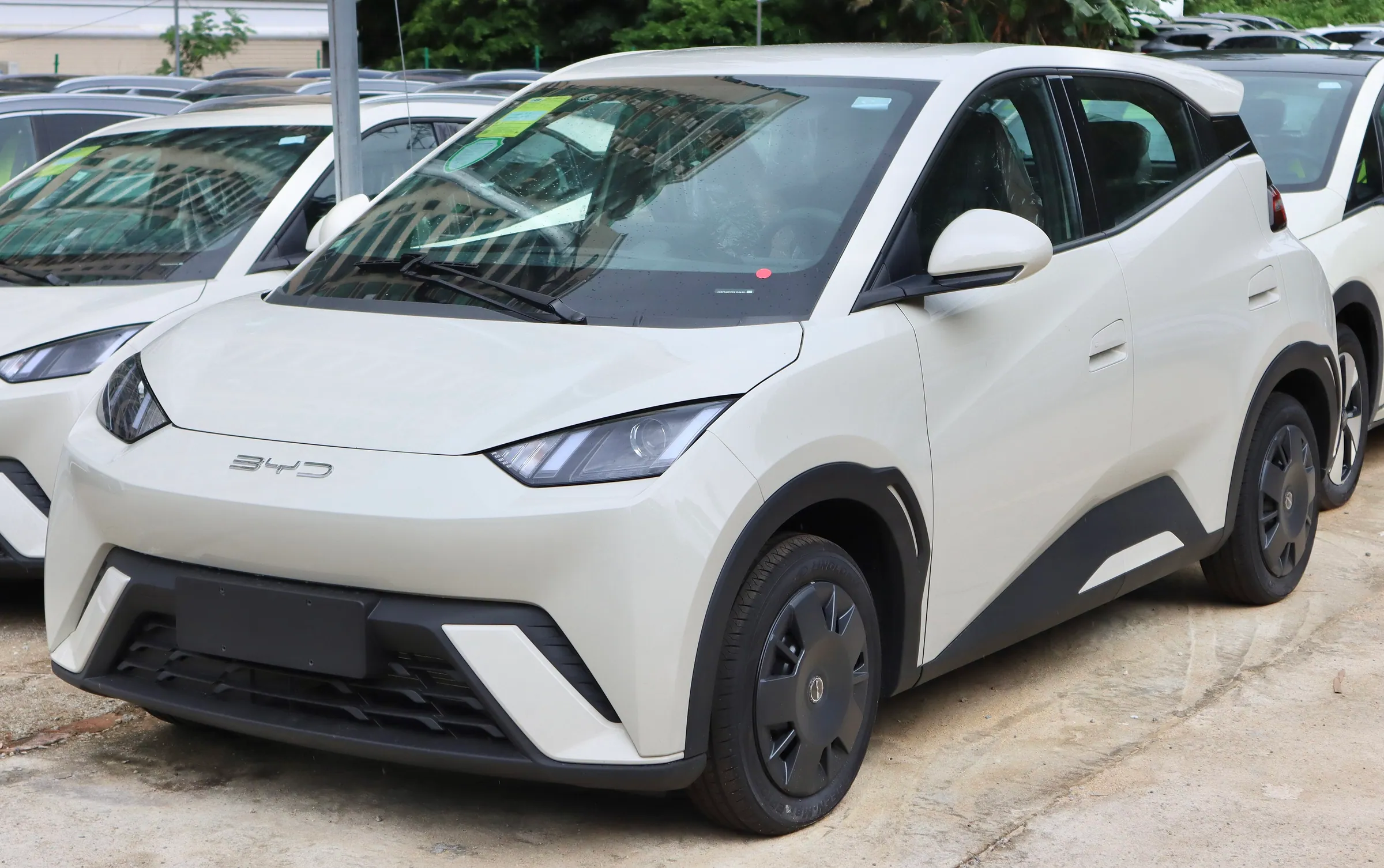
The bump above the windscreen is a lidar, the laser sensor Elon Musk called a fool’s errand in 2019. Chinese suppliers now sell some for as little as 800 yuan, Deutsche Bank estimates, and BYD sells a Seagull city car with one on the roof from 90,900 yuan.
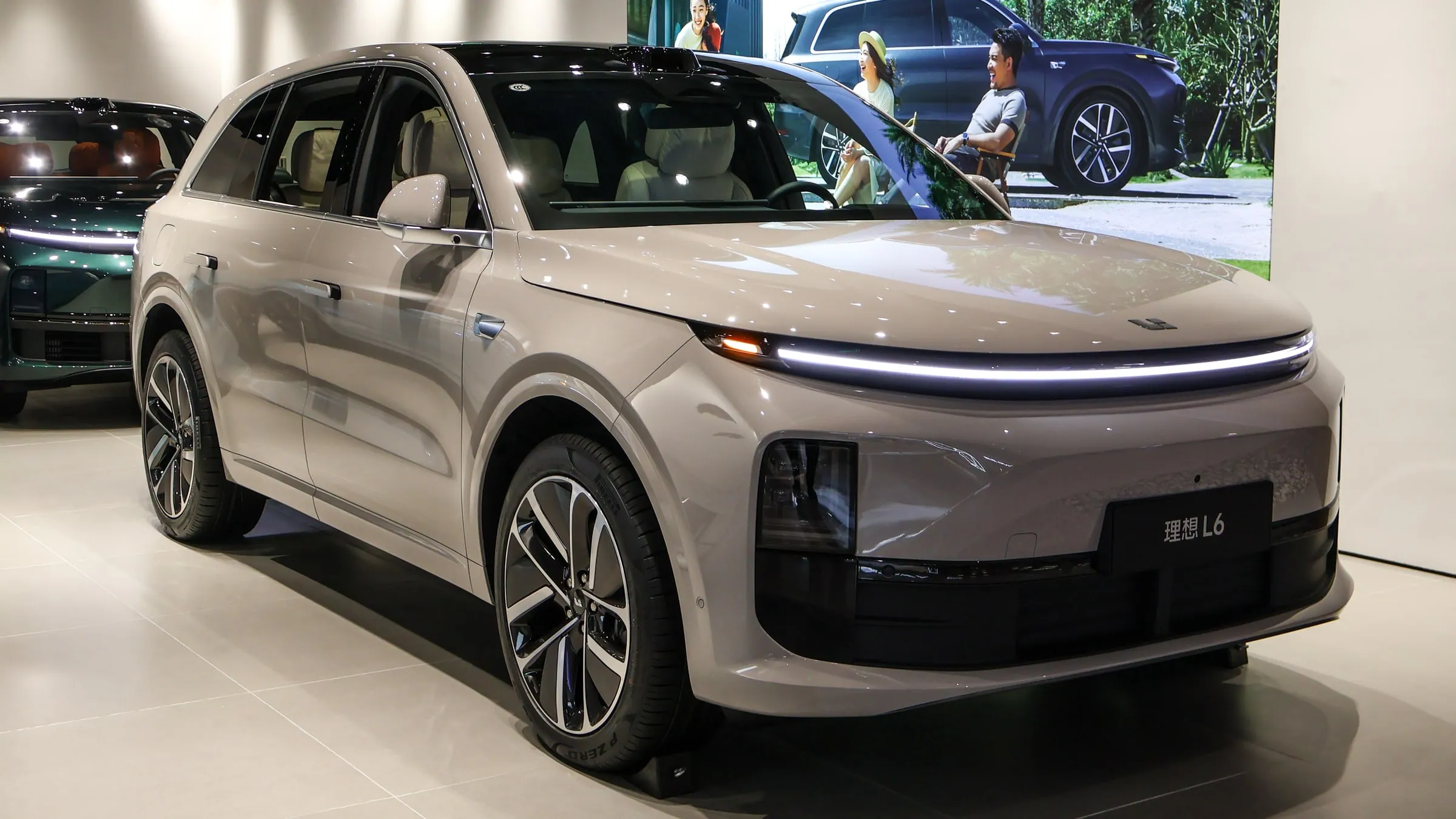
Park a Xiaomi YU7 next to a Tesla Model Y and look at the top of each windscreen. On the Tesla the glass runs smoothly into the roof. The Xiaomi has a small dark hump where the two meet, and you’ll see the same hump on Li Auto and Nio models and on a growing number of other Chinese cars.
The hump is a lidar, a sensor that fires rapid pulses of laser light and times how long each takes to bounce back. From those timings the car’s computer builds a 3D picture of its surroundings, with the distance to every point measured. A camera has to work distances out from flat images.
Google’s first self-driving prototype, a Toyota Prius, carried a Velodyne lidar that cost around $75,000. Google put it on a large riser on the roof because, as Ars Technica later explained, the sensor needed to be up high to see around the car.
Nio gives much the same reason today. It calls the sensor layout on its cars a “watchtower” and says it gives better visibility. Its lidar supplier, Seyond, told Driving Vision News in 2024 that roof mounting is popular in China, and that on Nio’s cars the lidar is cooled passively and has no cleaning system. The roof also puts the sensor where buyers can see it, and we doubt the carmakers mind.
Tesla has never fitted lidar to the cars it sells. At its Autonomy Day in April 2019, Elon Musk called lidar “a fool’s errand” and compared the sensors to “a whole bunch of expensive appendices”. In December 2024 a Tesla vice president, Grace Tao, made the case for cameras alone on Weibo. Roads are designed for human eyes, she wrote, and a car’s computer struggles to decide what to do when its radar and cameras disagree. Lidar, she added, raises the cost of the car.
Later that month Li Xiang, who founded Li Auto, was asked why his cars carry lidar when Tesla’s don’t. He answered with a picture of Chinese motorways after dark. “If you regularly drive at night in China, you’ll see large trucks with broken taillights,” he said, in CnEVPost’s translation, and some may even be “parked right on the main road”. In unlit darkness, he said, cameras see slightly more than 100 metres at best and lidar sees 200, and the extra range lets Li Auto’s automatic emergency braking, the system that brakes when something blocks the road, work at 130 km/h. If Musk had driven those roads at night, Li said, “he would have chosen to keep a lidar in the front as well”. Hesai, Li Auto’s lidar supplier, says the carmaker has made lidar standard on every new model since May 2025.
Xpeng has come round to Tesla’s view. It used to fit lidars near the headlights of the Max versions of its G6 and G9, but the P7+ saloon it launched in November 2024 had none, and every new Xpeng since has used what CnEVPost calls a Tesla-like pure vision system. In May 2026 its chief executive, He Xiaopeng, said other industries still need lidar but cars no longer do. Liu Xianming, who runs Xpeng’s general intelligence centre, argued that lidar picks up a mass of noise around the car in rain or fog, while high-resolution cameras give the system far more information every second. At its AI Day on 25 November, Xpeng said its robotaxi uses no lidar either.
BYD’s God’s Eye driver assistance, launched in February 2025, comes with or without lidar. The basic tier, for BYD-brand cars, has 12 cameras, five radars and 12 ultrasonic sensors but no lidar. Higher tiers add one lidar, for Denza and some BYD flagships, or three, for Yangwang. In May 2026 BYD made the one-lidar tier an option on two versions of the new Seagull, a hatchback 3.78 metres long that starts at 69,900 yuan. With the lidar, which sits on the roof, those two cost 90,900 and 97,900 yuan. BYD sold 529,537 Seagulls in 2025.
How lidar got cheap
In our view, falling prices have done more than any argument about night driving or rain to put lidar on Chinese cars. In November 2024 Hesai told Reuters that its next sensor, the ATX, would sell for under $200 in 2025, half the price of its AT128. Its chief executive, David Li, credited chips Hesai designs itself and fuller factories, and said lidar would then appeal even for EVs under 150,000 yuan. He compared it to airbags and seat belts.
Deutsche Bank, working from NE Times data, estimates that some front lidars had fallen to about 800 yuan this year, and that 21.4% of the passenger cars sold in China in May had a main lidar at the front, 9.5 points more than a year earlier. Figures from Gasgoo, a Chinese car-industry research group, add up to 3.8 million lidars fitted to China’s passenger cars in the first nine months of 2026. Hesai supplied 1,276,913 of them, and Huawei, which makes lidars as well as running its car alliance, 1,226,858.
Luminar, an American lidar maker, filed for Chapter 11 in December 2025. Its filings named “pressure to reduce costs due to lower price points of China-based competitors” as the second most important reason it had struggled to build a self-sustaining business. RoboSense, another Chinese supplier, says it has orders for more than 1.5 million lidars from FAW Toyota and nearly a million from Dongfeng Nissan, Toyota’s and Nissan’s joint ventures in China. In May, Rivian’s chief executive, RJ Scaringe, told Reuters that for lidars at the “low hundreds of dollars price point” carmakers like Rivian need, “all the real choices are coming out of China”.
Where the sensor goes next
Our guess is that the hump won’t last. The ATX has the footprint of a beer mat, 10 cm square, and is 3 cm thick. Hesai says it can sit behind the windscreen or inside a headlight as well as on the roof. Hesai’s flagship ETX, built for L3 cars that can drive themselves in some conditions, needs a window 35% lower than the AT128’s, which Hesai says makes it possible to fit the lidar inside the cabin. Cars are also starting to carry several lidars. In its annual results Hesai said Li Auto, Xiaomi and Changan had picked it for models that typically carry three to six each, due in 2026 and 2027.
Lidar makers have found another market in robots. In the first quarter of 2026, for the first time, RoboSense sold more lidars for robotics and other uses than for cars: 185,500 against 144,800. Hesai now calls itself “a Physical AI infrastructure company”. Cars still took 638,055 of the 729,673 lidars it shipped in the third quarter of 2026.
Sources
- CarNewsChina: Xiaomi YU7 SUV launched, starts at 35,000 USD with 830 km range, 26 June 2025
- MIT Professional Education: Is LiDAR a 'fool's errand'?, 14 May 2019
- Ars Technica: Google's Waymo invests in lidar technology, cuts costs by 90 percent, 9 January 2017
- Nio: NIO Assisted and Intelligent Driving: Safe Intelligent Driving
- Driving Vision News: DVN-L interview and field trip: Seyond, 7 August 2024
- TechCrunch: 'Anyone relying on lidar is doomed,' Elon Musk says, 22 April 2019
- CnEVPost: Tesla would use LiDAR if Elon Musk ever drove on China's highways at night, Li Auto CEO says, 27 December 2024
- Hesai: Hesai secures exclusive lidar design wins for Li Auto's new-generation assisted driving platform, 11 November 2025
- CnEVPost: Xpeng files for facelifted G6 and G9, both without LiDAR option, 10 December 2024
- CnEVPost: Xpeng defends its pure vision strategy, says LiDAR is no longer necessary for cars, 21 May 2026
- CnEVPost: Xpeng ramps up physical AI push with Q2 2027 Iron robot launch and global smart driving subscriptions, 25 November 2026
- CarNewsChina: BYD released the new God's Eye driving assistance system, 10 February 2025
- CnEVPost: BYD launches 2026 Seagull, bringing LiDAR to micro EVs, 11 May 2026
- Electrek: BYD launches new Seagull with LiDAR for $13,000, setting a first for entry-level EVs, 12 May 2026
- Reuters, via Yahoo Finance: Exclusive: China's Hesai to halve lidar prices next year, sees wide adoption in electric cars, 27 November 2024
- CnEVPost: Nio supplier Seyond's Q2 LiDAR shipments surge 385% as Robin series takes off, 7 July 2026
- Gasgoo Automotive Research Institute: Rankings of ADAS component suppliers in China, January to September 2026
- TechCrunch: China's Hesai will double production as lidar sensor industry shakes out, 5 January 2026
- CnEVPost: RoboSense wins another 500,000-unit LiDAR order from FAW Toyota, 3 June 2026
- CnEVPost: Rivian mulls LiDAR production in potential Chinese partnership, 6 May 2026
- Hesai: ATX lidar, product page
- Hesai: ETX lidar, product page
- Hesai: Fourth quarter and full year 2025 unaudited financial results, 24 March 2026
- RoboSense: RoboSense announced Q1 2026 LiDAR sales, robotics segment grows 1,458.8% YoY to over 185,500 units, 9 April 2026
- Hesai: Third quarter 2026 unaudited financial results, 10 November 2026

Saba founded VoltScope and edits every story on it, checking each figure against the sources listed at its foot.
- Lidar
- Driver assistance
- Hesai
- Li Auto
- Xpeng
- BYD Seagull
- Tesla