CLTC vs WLTP vs EPA: why a Chinese EV’s range rating drops outside China
BYD rates the rear-drive Seal at 700 km in China and 570 km in Europe, and Germany’s ADAC got 405 km out of it. China’s CLTC test drives more slowly than WLTP or the EPA’s, and none of them is a winter motorway run.
In 2022 BYD launched the Seal saloon in China with an 82.5 kWh battery and a 230 kW motor driving the rear wheels, and rated that version at 700 km. When the same pairing went on sale in Europe the following year, BYD gave it 570 km. Germany’s motoring club, ADAC, put one through its own test in November 2024 and got 405 km.
The battery and motor were the same each time. The 700 km comes from China’s CLTC test and the 570 km from Europe’s WLTP, and the US has a third test, run by the Environmental Protection Agency. All three are laboratory runs on rollers, and each one drives the car through a different pattern of speeds.
The three tests side by side
| CLTC (China) | WLTP (Europe, UK) | EPA (US) | |
|---|---|---|---|
| One run | 30 min, 14.5 km | 30 min, 23.3 km | City 31 min, 17.7 km. Highway 13 min, 16.6 km |
| Average speed | 29 km/h | 46.5 km/h | City 34 km/h. Highway 78 km/h |
| Top speed | 114 km/h | 131 km/h | City 90 km/h. Highway 97 km/h |
| Time stopped | About 22% | 13% | City 18%. Highway none |
| Lab temperature | 23°C | 23°C | 20°C to 30°C |
| Correction at the end | None | None | Usually multiplied by 0.7 |
How the CLTC test works
CLTC stands for China Light-duty vehicle Test Cycle. To build it, engineers followed every journey of a couple of thousand cars for three years and added data from fleet operators, CarNewsChina reported. It replaced the old European NEDC cycle in China. The cycle itself is set out in a 2019 national standard, GB/T 38146.1, and since October 2021 the national range test for electric cars, GB/T 18386.1-2021, has been run on it. Spec sheets sometimes say CLTC-P, the passenger-car version, and a CLTC-C version covers vans and minibuses.
A run is made of eleven short trips, seven slow, three medium and one fast, and twelve idling stops. The one fast trip is the only time the car reaches 114 km/h. The test room is kept at 23°C, give or take five degrees. When auto motor und sport compared the cycle with WLTP in December 2024, it put CLTC’s high range figures down to the frequent stops, the low top speed and the very small share of motorway driving.
The Chinese standard has an optional annex for testing with the heater on in the cold, but the range on a Chinese spec sheet comes from the 23°C run.
How WLTP works
WLTP, the Worldwide harmonised Light vehicles Test Procedure, gives the figures on European and British price lists. It was developed from driving data gathered around the world, according to the European carmakers’ association, ACEA. The cycle has four phases, low, medium, high and extra high. The extra-high phase runs for 323 seconds and peaks at 131 km/h. The other three never reach 100 km/h, and they take up 82% of the half hour, though by distance the extra-high phase counts for more: 8.3 km of the 23.3 km.
Carmakers can also publish a city figure, taken from the two slower phases alone. That’s how BYD’s European leaflet for the Atto 3 can quote 565 km for the city and 420 km overall. WLTP runs at a fixed 23°C, and the result goes on the price list with no correction applied.
How the EPA tests range
In the US the car starts with a full battery and is driven over the EPA’s city cycle until it runs flat, and the same is then done on the highway cycle. Carmakers may use a shorter multi-cycle test instead, which strings together four city cycles, two highway cycles and two stretches at constant speed. The air conditioning and the heater stay off.
The EPA then cuts the result to allow for what the lab runs leave out: air conditioning, cold weather, and fast or aggressive driving. The usual method multiplies the city and highway ranges by 0.7, and the figure on the label weights them 55% city and 45% highway. For petrol cars the EPA runs five tests, adding a cold run at minus 7°C with the heater on, a hot one at 35°C with the air conditioning on, and a fast one that peaks at 129 km/h. With electric cars the 0.7 factor is the most common approach, but it isn’t fixed. Recurrent, an EV data firm, found that Tesla had used 0.65 for one model in 2017 and 0.69 on the same test data in 2020.
WLTP has no such step, and InsideEVs noted that the WLTP figure for a car is usually higher than its EPA rating.
How far apart the ratings land
The cleanest comparisons come from cars that BYD and Xpeng launched in both China and Europe with the same battery and motor. The figures below are for those launch versions.
| Car | Battery | CLTC, China | WLTP, Europe | WLTP lower by |
|---|---|---|---|---|
| BYD Atto 3 (Yuan Plus in China) | 49.92 kWh | 430 km | 345 km | 20% |
| BYD Atto 3 (Yuan Plus in China) | 60.48 kWh | 510 km | 420 km | 18% |
| BYD Seal, rear-wheel drive | 82.5 kWh | 700 km | 570 km | 19% |
| Xpeng G6 Long Range, one motor | 87.5 kWh | 755 km | 570 km | 25% |
For these four the WLTP rating is 18% to 25% below the CLTC one. On the G6 that’s 185 km.
Other makers’ gaps can be much smaller. The German magazine auto motor und sport pointed out that Tesla advertised a Model 3 at 678 km in Germany and 713 km in China, about 5% apart.
Nor is CLTC always the most generous number. The 60.48 kWh Atto 3’s WLTP city rating, 565 km, is higher than its 510 km on CLTC. BYD’s leaflet also shows what WLTP’s faster phases cost: the car uses 12 kWh per 100 km over the two slower phases and 16 kWh over the whole cycle. In slow traffic and mild weather CLTC can be close to what an owner gets. CarNewsChina reported in 2023 on a Leapmotor C11 owner in Chengdu who drove almost entirely within the city, at 15°C to 30°C, and covered 301.2 km on a share of the battery that CLTC said was worth 309 km.
You may meet a fourth number in some Asian markets, from the old NEDC cycle. When Leapmotor’s C10 SUV went on sale in Malaysia in October 2024, it was quoted at 424 km on WLTP and 477 km on NEDC.
Working out the range you’ll get
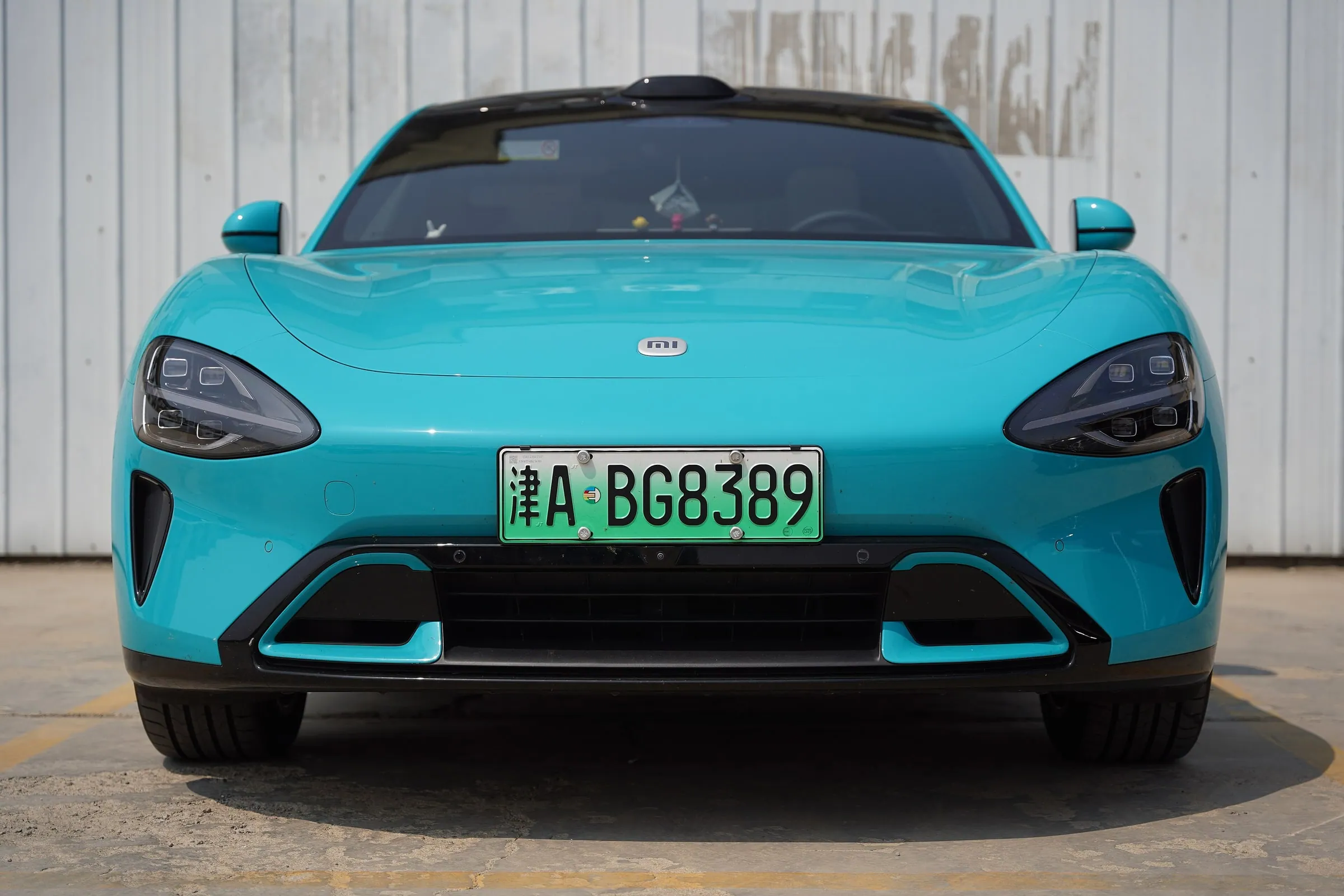
Start from the WLTP figure if the car has one. CarNewsChina’s Leo Breevoort, who thinks CLTC is a useful number for many urban Chinese drivers, says it tells you nothing about typical European or American driving. For a car sold only in China, such as the Xiaomi SU7, CLTC is all there is. The pairs above put WLTP roughly a fifth to a quarter lower, and the Tesla shows that some cars sit well outside that band. Our glossary explains the other terms on a Chinese spec sheet.
In mild weather
ADAC’s Ecotest ran a slightly adapted version of the WLTP cycle at 23°C, with the air conditioning on and 200 kg aboard. The Seal managed 405 km, 71% of its WLTP rating and 58% of its CLTC one. The 60.48 kWh Atto 3 managed 345 km, 82% of WLTP and 68% of CLTC. ADAC stopped running the Ecotest at the end of 2025 and keeps the results online.
In winter
Recurrent looked at more than 59,000 electric cars in the US over several winters. On average they kept 78% of their best range at 0°C and 69% at minus 7°C, and a heat pump was worth up to 8% more at 0°C. The best performer, a Tesla Model S with a heat pump, kept 90% and 82%. AAA’s laboratory tests in 2019 found a bigger loss. With the heater running at minus 7°C, five electric cars lost 41% of their range on average.
For its winter range test, Norway’s motoring organisation, NAF, drove the cars from Oslo into the mountains, with temperatures below minus 20°C on the high ground. Its advice afterwards was to expect to charge before covering half of a car’s stated range once real cold sets in.
On the motorway
None of the three tests holds a car at motorway speed for long. CLTC touches 114 km/h once, WLTP’s extra-high phase lasts under six minutes, and the EPA’s highway cycle averages 78 km/h. For a long run at 110 to 130 km/h, treat the WLTP figure as a ceiling and plan your charging stops on less.
Take the Seal again: 700 km on CLTC, 570 km on WLTP and 405 km in ADAC’s test at 23°C. Apply Recurrent’s average for minus 7°C to ADAC’s figure and you get about 280 km, or 40% of the number on the Chinese spec sheet.
Sources
- DieselNet: China Light-Duty Vehicle Test Cycle (CLTC)
- DieselNet: Worldwide harmonized Light vehicles Test Cycle (WLTC)
- Code of China: GB/T 18386.1-2021, test methods for energy consumption and range of electric vehicles, part 1: light-duty vehicles
- Code of China: GB/T 18386.1-2021 with Amendment 1 (XG1-2025)
- CarNewsChina: The main misconception about the CLTC range, 20 May 2023
- auto motor und sport: Why the China cycle CLTC gives very different consumption figures (in German), 25 December 2024
- WLTPfacts.eu (ACEA): What is WLTP and how does it work?
- US Environmental Protection Agency: Fuel economy and EV range testing
- fueleconomy.gov (US Department of Energy and EPA): Detailed test information: EPA test schedules
- Recurrent: What is EPA range?, 25 July 2022
- InsideEVs: Why EPA and WLTP range ratings differ, 20 November 2023
- Xpeng: XPENG launches G6 Ultra Smart Coupe SUV in China, 29 June 2023
- CarNewsChina: Xpeng G6 electric coupe SUV launched with 800V fast charging, 30 June 2023
- electrive: Xpeng G6 can be ordered in the first European markets (in German), 3 May 2024
- CarNewsChina: BYD Seal started sales in China, 29 July 2022
- BYD: BYD SEAL arrives in Europe, 1 September 2023
- InsideEVs: BYD Yuan Plus launch specifications, 20 February 2022
- BYD Europe: BYD Atto 3 technical data and specification leaflet, 2025
- Paul Tan's Automotive News: Leapmotor C10 EV launched in Malaysia, 16 October 2024
- ADAC: Electricity consumption of electric cars in the ADAC Ecotest (in German)
- ADAC: How the ADAC Ecotest works (in German)
- Recurrent: Winter EV range loss, November 2026
- AAA: Cold weather reduces electric vehicle range, 7 February 2019
- NAF: El Prix winter 2026 range test (in Norwegian)

Saba founded VoltScope and edits every story on it, checking each figure against the sources listed at its foot.
- Range
- CLTC
- WLTP
- EPA
- Winter range
- BYD
- Xpeng